


Easy to Use
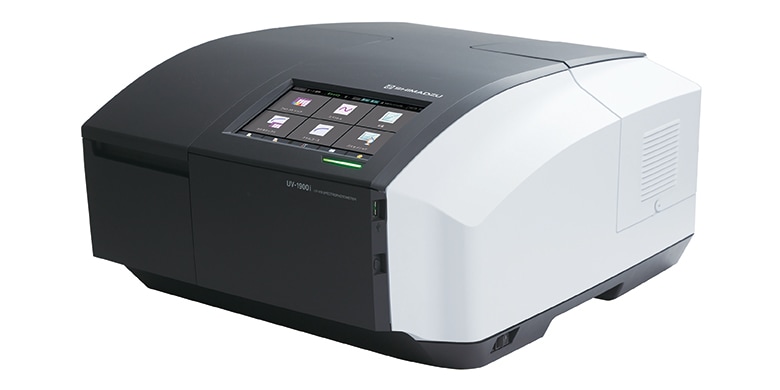
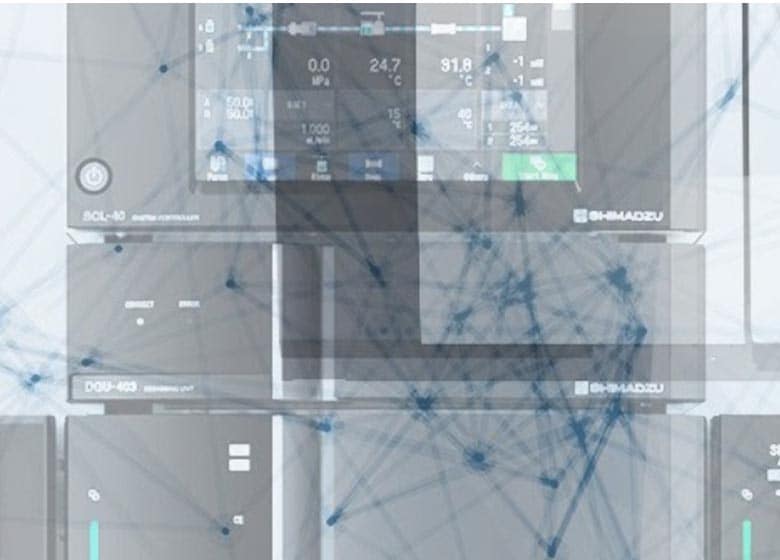
The large liquid-crystal display (LCD) has been incorporated with easy to follow prompts, large fonts, and graphics to help reduce the time needed to get results. The descriptions on the instrument's soft keypad quickly guides you through specific programs.
New Opportunities for BioScience
Comprehensive Nucleic Acid and Protein Analysis modules provide quick and easy answers. Some of the standard functions include:
Complete Wavelength Scanning
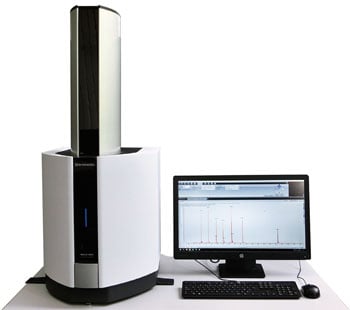
The BioMini comes standard with a Spectrum mode that allows for full spectral data acquisition over the wavelength range of 190nm to 1100nm. Upon completion of the spectral scan, the peaks and valleys can be marked within a few seconds. The standard peak pick function allows for clear and accurate detection of the most sensitive wavelengths.
"..allows for full spectral data acquisition."
DNA Companion Program
Spectral and Quantitation data is usually just the start in most biotechnology labs. The BioMini comes standard with a DNA companion program that allows for the determination of molecular weight, molar extiction coefficients, and theoretical melting temperatures. This information is useful for further experimentation optimzation, such as PCR. The Bio Mini gives you what you want from a spectrophotometer plus more information that you need.
Customize for Versatility
With many types of accessories and additional program packs, the Bio Mini can provide all the tools necessary to fit your specific BioScience application and sampling requirements. The BioMini is breaking the barriers and providing new opportunities.
Select UV-VIS on sale at our new web store (15% off)!
| Spectral Bandwidth | 5nm |
| Wavelength Range | 190.0nm to 1100.0nm |
| Wavelength Settings | 0.1nm increments (1nm increments when setting the wavelength scanning range) |
| Wavelength Accuracy | ±1.0nm |
| Scan Speed | Change: Approx. 3800nm/min |
| Wavelength Scan: Approx. 24 to 1400nm/min | |
| Stray Light | Less than 0.05% (220.0nm NAl, 340.0nm NaN02 and UV-39) |
| Photometric System | Single beam optics |
| Recording Range | Absorbance: -3.99 to 3.99Abs |
| Transmittance: -399 to 399% | |
| Photometric Accuracy | ±0.005Abs (at 1.0Abs), using the NIST 930D filter |
| ±0.003Abs (at 0.5Abs), using the NIST 930D filter | |
| Noise Level | Less than 0.002Abs, Peak to Peak |
| Less than 0.005Abs, RMS, Air Blank | |
| Light Source | 20W Halogen lamp (2000H long life model) |
| Deuterium lamp (socket type), with built-in automatic adjustment of maximum sensitivity. | |
| Monochromator | Aberration-correcting concave holographic grating is used |
| Detector Device | Silicon photodiode |
| Display | 6 inch LCD (320x240 dots), with backlight and contrast adjustments |
| Power Supply | 100 to 120V, 50/60Hz, 160VA (Cat. No.241-06250-92) |
| 220 to 240V, 50/60Hz, 160VA, (Cat. No.241-06250-38) | |
| Size | 416 (W) x 379 (D) x 274 (H) |
| Weight | 11kg |
| Ambient Temperature, Humidity Requirements | Room Temperature 15°C to 35°C, Humidity 45% to 80% |
| The humidity should be less than 70% if it is over 30°C |
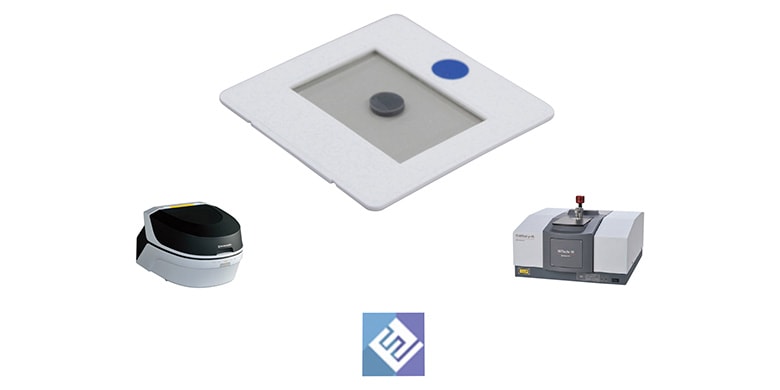
Tray Cell for Microliter Sample Analysis (pdf - 160kb)