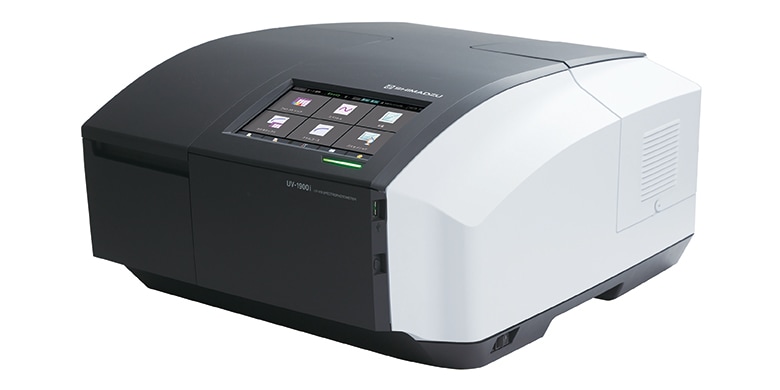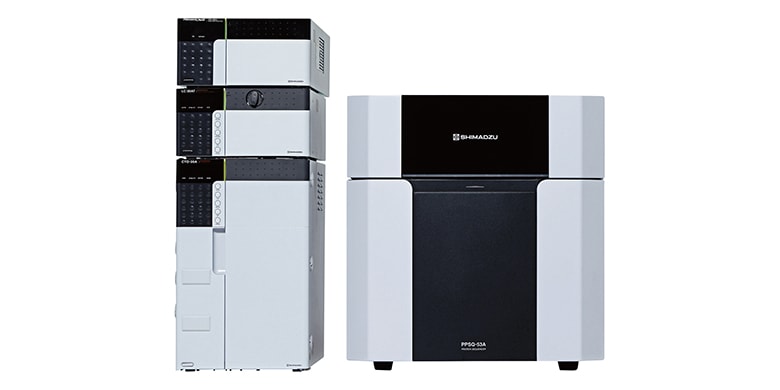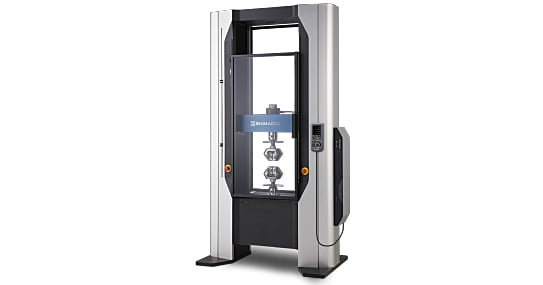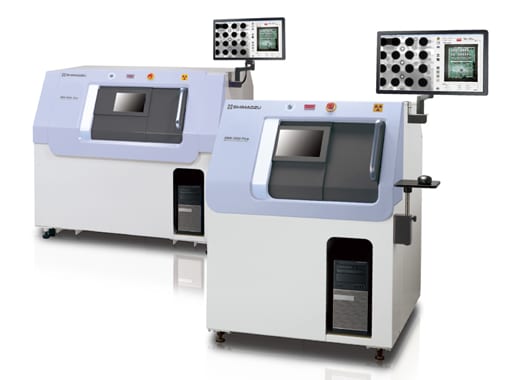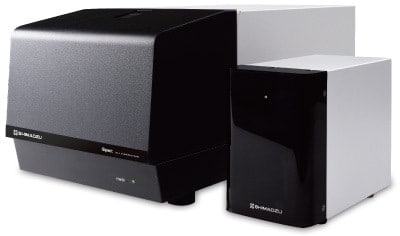


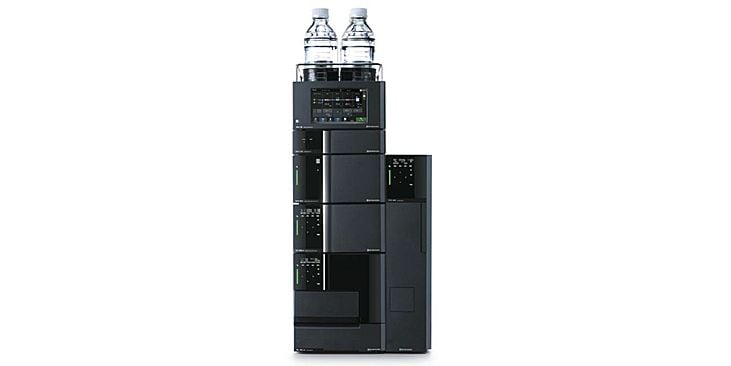
This single monochromator system provides the analyst with the reliability and performance our customers have come to expect in Shimadzu instruments. The low stray light, wide dynamic range, small beam size combination makes this instrument well suited to handle a variety of practical situations.
From small sample volumes to highly absorbing samples, the UV Probe software gives you the power and versatility of an extremely sophisticated system in a package that's easy to learn and use. Additional software enhancements like Kubelka-Munk conversion, area calculations and peak picks make this an instrument for the real world. What's more, it can resolve the triplet peaks in the vapor spectrum of benzene near 250nm with ease.
An Unparalleled Instrument For Your Demanding Applications
When you can't dilute the sample or reduce the path length, think of the UV-2550. The double blazed grating, double monochromator (DDM) in this instrument is just waiting for those samples. Shimadzu has achieved the world's lowest level of stray light and highest energy throughput with this unique design. By creating two blaze wavelengths (200nm and 600nm), Shimadzu has overcome the energy loss and sensitivity restrictions usually associated with double monochromator instruments. The face of the grating is actually divided into two unique areas for short and long wavelength measurements. The sodium iodide spectra for the double monochromator UV-2550 and a single monochromator instrument described below put this information into practical terms.
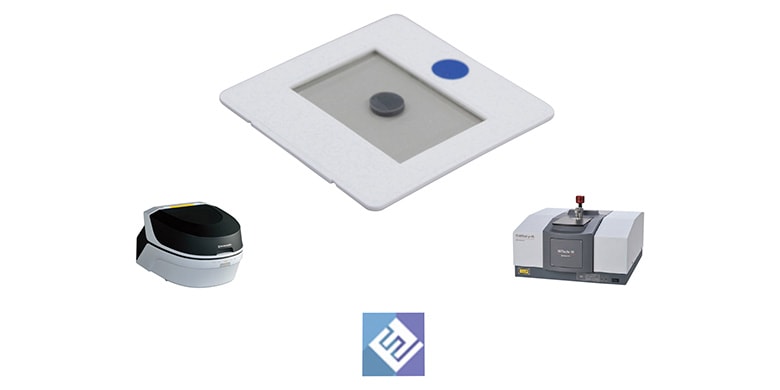
Capillary Cuvettes
Micro Sample Holder
| Wavelength Range | 190 to 900nm (performance guaranteed range). Extendable to 1,100nm through the use of the optional photomultiplier. (The measurable range maybe restricted in the shorter wavelength side depending on the type of photomultipler used.) |
| Monochromator System | UV-2450: Single monochromator with a high-performance blazed holographic grating in the aberration corrected Czerny-Turner mounting. |
| UV-2550: Double monochromator with a high-performance double-blazed holographic grating in the aberration corrected Czerny-Turner mounting. | |
| Resolution | 0.1nm |
| Spectral Bandwidth | 0.1, 0.2, 0.5, 1, 2 and 5nm |
| Wavelength Accuracy | ±0.3nm |
| Wavelength Repeatability | ±0.1nm |
| Wavelength Scanning Speed | FAST, MEDIUM, SLOW, and SUPER SLOW |
| Light Source | 50W halogen lamp (2,000 hours of life) and D2lamp (500 hours of life) |
| Light Source lamp switching | Selectable between 282nm and 393nm |
| Stray Light | UV-2450: Less than 0.015% at 220nm and 340nm UV-2550: Less than 0.0003% at 220nm and 340nm |
| Detector | Photomultiplier R-928 |
| Photometric System | Double beam, direct ratio system with dynode feedback |
| Photometric Mode | Absorbance (Abs.), transmittance (%), reflectance (%) and energy (E). |
| Photometric Range | Abosrbance: -4~5 Abs. (0.001 Abs. increments) Transmittance: 0~999.9% (0.01 increments) Reflectance: 0~999.9% (0.01% increments) |
| Photometric Accuracy | ±0.002Abs(0~0.5Abs), ±0.004Abs(0.5~1Abs),±0.3T (0~100%T) (all determined with NIST 930D standard filter) |
| Photometric Repeatability | 0.001Abs (0~0.5Abs), ±0.1%T |
| Baseline Correction | Selectable with storage in firmware |
| Baseline Flatness | Within ±0.001Abs. (excluding noise, 2nm slit width and SLOW wavelength scanning speed) |
| Drift | Less than 0.0004 Abs. per hour (after 2 hours warm-up) |
| Dimensions | 570 (W) x 660 (D) x 275 (H) (mm) |
| Weight | 36kg |
| Power Supply | AC 100V/120V/220V/240V, 50/60Hz 250VA (swithc-selectable) |