


Analysis of Microplastics in Environmental Water Using Microplastic Automatic Preparation Device MAP-100 and FTIR
This page introduces an example of analysis of microplastics in environmental surface water using a microplastic automatic preparation device MAP-100 and FTIR. Samples collected from a river were pretreated using the MAP-100. The sample was digested with H2O2 conducted for 3 days, followed by gravity separation for 3 hours. Fig. 1 shows the condition of the sample before preparation, during digestion(1 day after the start of treatment), and after preparation. From Fig. 1C, it shows that environmental contaminants could be removed by preparation with the MAP-100.
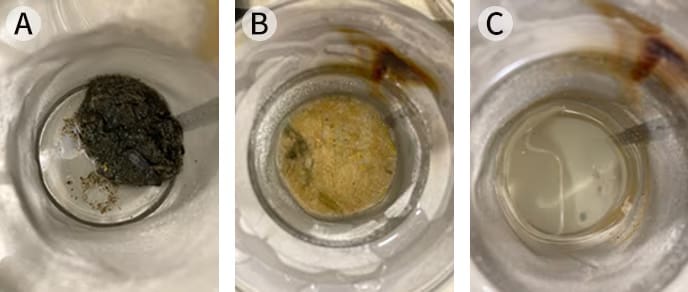
Fig. 1 Condition of Sample Before/After Preparation and during Digestion
a: Before Treatment, b: During Digestion (1 Day After Start of Treatment), c: After Treatment
A material analysis of the microplastics obtained by preparation using the MAP-100 was carried out using the Shimadzu Fourier transform infrared spectrophotometer (FTIR) Plastic Analyzer Package. Fig.2 shows the appearance of two measured microplastics, and Fig.3 and Fig.4 show the measurement results of the obtained infrared spectra and the search results using the UV-Damaged Plastic Library, which is an original Shimadzu database.
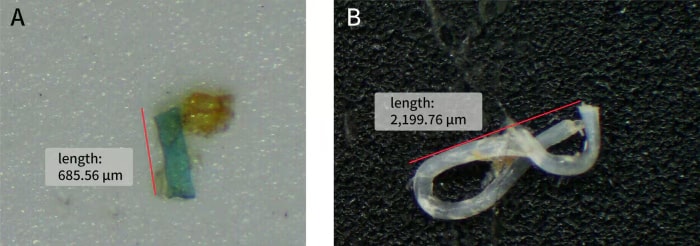
Fig. 2 Appearance of Microplastics (a) and (b)
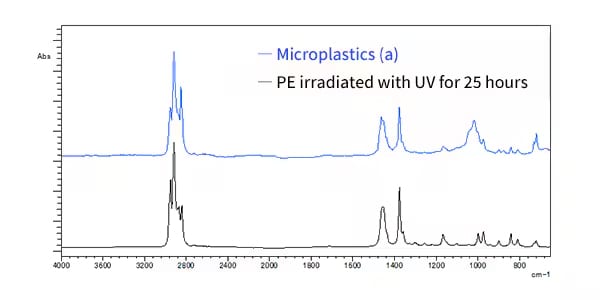
Fig. 3 Infrared Spectrum and Search Results for Microplastic (a)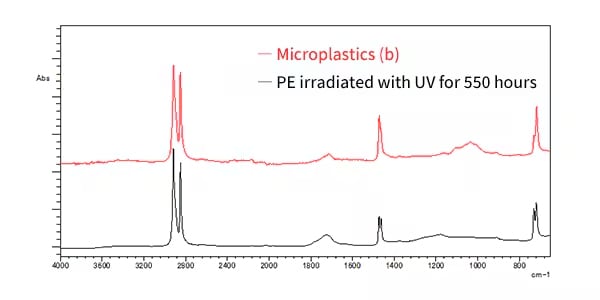
Fig. 4 Infrared Spectrum and Search Results for Microplastic (b)
Fig. 3, compares a microplastic particle (a) with polypropylene (PP) irradiated with UV for 25 hours and Fig. 4, compares polyethylene (PE) irradiated with UV for 550 hours with a spectrum obtained for microplastic(b). The respective data showed extremely high matches of 876 points for (a) and 904 points for (b). These high scores demonstrate that high quality infrared spectra of plastics can be acquired by removing environmental contaminants with the MAP-100.