


Microplastics (MPs) Analysis Using FTIR
Figs. 1 show the fishing nets and fishing lines collected at Majorca island in Spain and Texel island in the Netherlands. Figs. 2 show fishing nets obtained at a recycling plant. The results of measurement using FTIR showed that, polyethylene was the main component in many cases, and the other components were polypropylene .
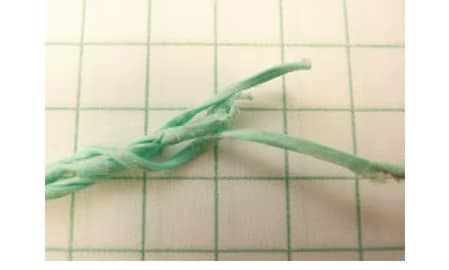
Polyethylene, Polypropylene
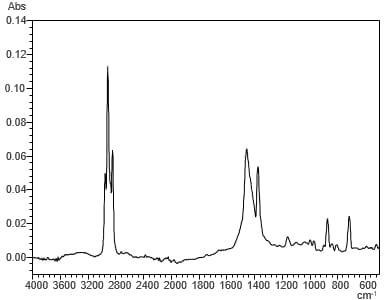
Figs. 1 Results of Measurement Using FTIR of Fishing Nets Collected on Beaches
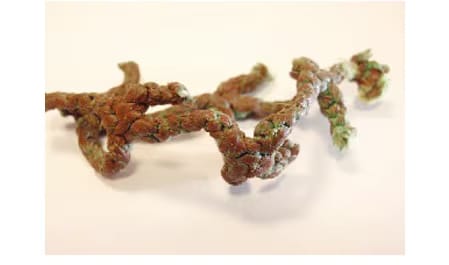
Polyethylene, Polypropylene, Polyamides
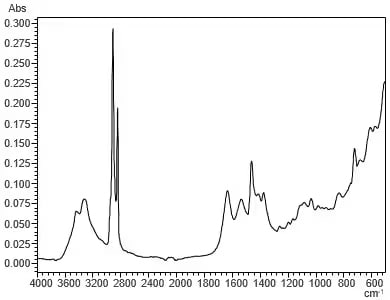
Fig. 2 Results of Measurement Using FTIR of Fishing Nets obtained at a Recycling Plant
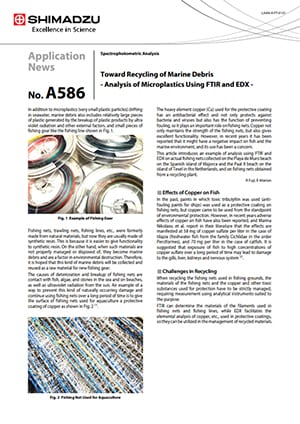
Toward Recycling of Marine Debris - Analysis of Microplastics Using FTIR and EDX -
This article introduces an example of analysis using FTIR and EDX on actual fishing nets collected on the Playa de Muro beach on the Spanish island of Majorca and the Paal 9 beach on the island of Texel in the Netherlands, and on fishing nets obtained from a recycling plant.
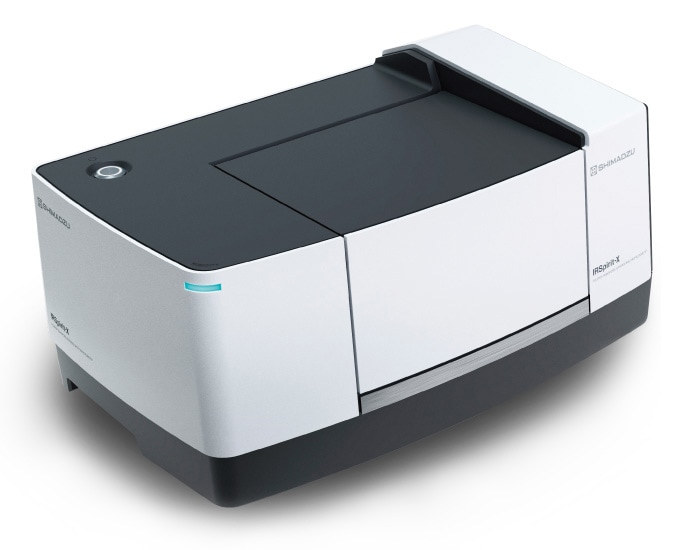
Fourier Transform Infrared Spectrophotometer (FTIR)
FTIR can qualitatively analyze organic matter and some inorganic matter, so it allows quick determination of the main components of fishing nets.