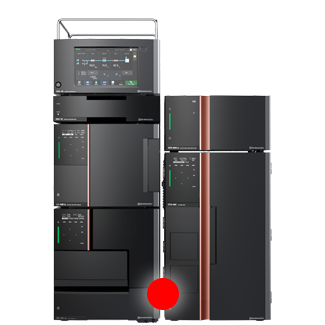
sample

Get the unmatched performance and data quality you need from your HPLC systems

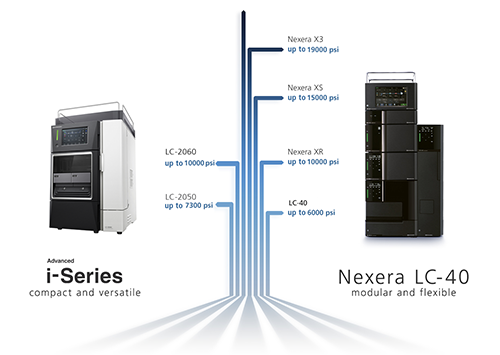
Shimadzu has been at the forefront of HPLC/UHPLC design and manufacturing for more than 40 years, developing instruments that enable chromatographers to select the system best suited to their application. Whether used for routine liquid chromatography analysis or high-end research, our versatile portfolio of instruments, from micro LC and analytical HPLC/UHPLC to SFC and preparative HPLC, delivers unmatched performance and data quality. In addition, with the incorporation of Analytical Intelligence, these systems simplify operation and enable more efficient workflows.
Consumables Guides HPLC FAQs

Recommended

Liquid Chromatography FAQs

FAQs

HPLC is an analytical technique that separates compounds dissolved in a liquid sample. It allows quantitative analysis of respective components that are contained in the sample.

What is the principle of separation in HPLC?

HPLC seeks to separate compounds in a sample solution based on their interactions with a mobile phase – a liquid – and a stationary phase – a solid adsorbent or a liquid-coated surface of a packing material. The sample solution is injected into a separation column in which, the stationary phase is immobilized, and then introduced to the detector at a stable flow rate controlled by the solvent delivery pump. The compounds contained in the sample are separated in the column before being detected by a detector, and once eluted from the column, each compound is quantified in the form of chromatography.

Which columns are used in HPLC?

HPLC columns are categorized into the following: Normal-phase columns: Used for the separation of low-polarity compounds such as steroids and lipids, which have excessive retention in reversed phase mode. Reversed-phase columns: Used for separating synthetic polymer and widely compounds ranging from small to medium-sized molecules including pharmaceuticals and peptides. Size-exclusion columns: Used for separating large biomolecules, including proteins and nucleic acids. Ion-exchange columns: Used for separating inorganic or metal ions and ionizable organic compounds based on their charge. HILIC columns: Kind of normal-phase column, used for separating highly polar compounds, such as sugars and nucleic acids, which are difficult to retain in reverse-phase mode because of the action of the hydrated layer on the surface.

What are reversed-phase and HILIC HPLC?

Depending on the compounds analyzed and the separation requirements of the analysis, you may need to choose between reversed-phase columns or HICLIC columns. If you’re aiming to separate polar compounds such as sugars and alkaloids, you’ll look to HICLIC chromatography, as polar compounds are more easily retained by polar stationary phases. Alternatively, reversed-phase chromatography is ideal if your ambition is to separate mixtures with less polarity.

How much does an HPLC system cost?

HPLC systems’ prices vary based on their capabilities. The cost of HPLC instruments will depend on the preset process, the target number of samples you aim to analyze, and the HPLC workflows. The integration of cutting-edge innovations, including analytical intelligence, will also impact the value of the HPLC instrument.

What is the main difference between HPLC and UHPLC?

UHPLC (also abbreviated to UPLC) offers time based greater separation efficiency than HPLC. This is because UHPLC can be operated at higher pressures thanks to smaller particle sizes of the column packing material. This also affords reduced solvent use.