


Multiplex LC-MS/MS Frequently Asked Questions
Share
Share
Add Bookmark
Multiplex LC-MS/MS technology helps laboratories increase sample throughput, improve mass spectrometer utilization, and reduce analytical turnaround times. Learn how the Nexera™ QX Multiplex LC-MS/MS System enables continuous MS operation and supports high-throughput analytical workflows across pharmaceutical, bioanalytical, environmental, food safety, and clinical research laboratories.
A multiplex LC-MS/MS system uses multiple LC or UHPLC streams connected to a single mass spectrometer to increase sample throughput and improve instrument utilization. Rather than allowing the mass spectrometer to sit idle during injection, column washing, or equilibration, multiplexing coordinates multiple chromatographic streams so analytical data acquisition can continue while other streams prepare for the next analysis.
The Nexera™ QX Multiplex LC-MS/MS System uses multiple UHPLC streams and intelligent scheduling to maximize the productive use of a single mass spectrometer, helping laboratories process more samples without adding additional MS instruments.
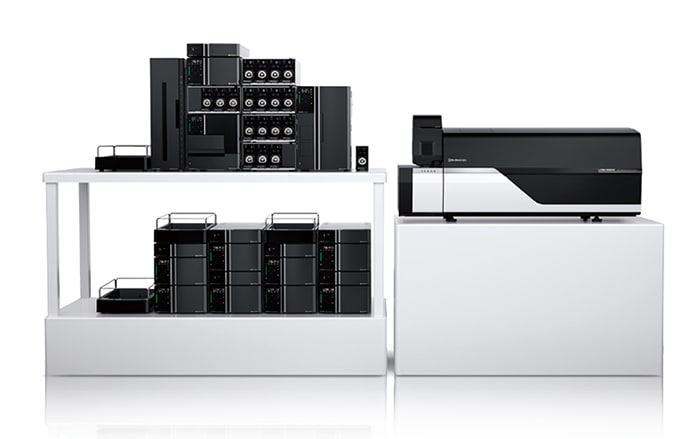
The Nexera™ QX increases LC-MS/MS throughput by coordinating multiple UHPLC streams with a single mass spectrometer. While one stream is acquiring data, other streams can simultaneously perform injection, column washing, and equilibration activities.
This parallel workflow minimizes non-productive waiting periods and allows laboratories to analyze more samples per day while maintaining existing chromatographic methods, analytical performance, and data quality.
Key Benefits
- Increased LC-MS/MS throughput
- Higher sample throughput
- Faster analytical turnaround times
- Improved laboratory productivity
- Better utilization of existing LC-MS/MS resources
- Lower cost per sample
In a conventional LC-MS/MS workflow, the mass spectrometer often waits while chromatographic systems complete injection cycles, column re-equilibration, or cleaning procedures.
Multiplex LC-MS reduces this idle time by alternating between multiple UHPLC streams. As one stream performs preparation activities, another stream delivers analytes to the mass spectrometer for data acquisition. This continuous workflow helps keep the mass spectrometer focused on collecting analytical data rather than waiting for supporting workflow steps to finish.
By reducing idle time and increasing productive analysis time, multiplex LC-MS helps laboratories achieve greater productivity from existing instrumentation.
The Nexera™ QX improves mass spectrometer utilization by increasing the percentage of time the mass spectrometer is actively collecting data.
Through automated stream scheduling, intelligent switching, and coordinated UHPLC operation, Nexera QX minimizes downtime associated with conventional LC-MS/MS workflows. This allows laboratories to maximize the return on their mass spectrometer investment while increasing sample throughput and delaying the need for additional instrumentation.
Benefits of Improved Utilization
- Greater productivity from existing LC-MS/MS systems
- Increased throughput without purchasing another mass spectrometer
- Enhanced laboratory efficiency
- Improved return on investment
- Better resource allocation
- Higher instrument productivity
Multiplex LC-MS/MS is ideal for high-volume laboratories that need to increase throughput while maintaining analytical performance and data quality.
Common Applications
Pharmaceutical Analysis
Support high-throughput quantitative workflows for drug discovery, development, and quality testing.
DMPK (Drug Metabolism and Pharmacokinetics)
Accelerate sample analysis in drug metabolism and pharmacokinetic studies.
Bioanalysis
Increase throughput for targeted LC-MS/MS assays in regulated and research environments.
Clinical Research
Improve laboratory productivity for large-scale quantitative testing and biomarker studies.
Environmental Testing
Analyze more samples for contaminants, pesticides, PFAS, and emerging pollutants while maintaining data quality.
Food Safety
Support high-volume screening for pesticides, residues, contaminants, and food quality applications.
Forensics and Toxicology
Increase throughput for toxicology screening and targeted quantitative analyses.
Routine Quantitative LC-MS/MS
Improve productivity for any application requiring large numbers of targeted analyses.
Key Advantages Across Applications
- Increased sample capacity
- Faster turnaround times
- Improved mass spectrometer utilization
- Lower cost per sample
- Greater laboratory productivity
- Better return on investment