


EPA Method 1613B
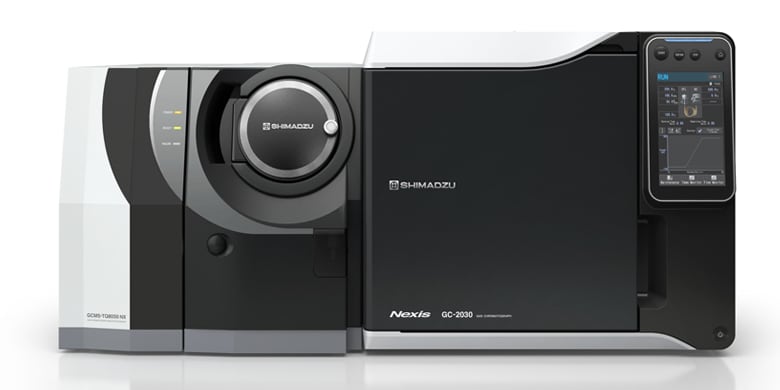
PAM-16130-SSI uses a Shimadzu GCMS-TQ8050NX triple quadrupole GC-MS/MS instrument with a Boosted Efficiency Ion Source (BEIS) and Multiple Reaction Monitoring (MRM) in place of the GC/HRMS used in EPA Method 1613B to identify the target analytes in the presence of other organic contaminants. This new procedure addresses the challenge of using GC/HRMS instruments, including the high cost to purchase and maintain and difficulty in obtaining parts from manufacturers.
Learn more about the GCMS-TQ8050 NX Triple Quadrupole GC-MS.
Shimadzu Scientific Instruments and PACE Analytical Services have developed an alternate test procedure (ATP) to EPA method 1613B – PAM-16130-SSI: Determination of 2,3,7,8-Substituted Tetra- through Octa-Chlorinated Dibenzo-p-Dioxins and Dibenzofurans (CDDs/CDFs) Using Shimadzu Gas Chromatography Mass Spectrometry (GC-MS/MS). This method is listed at 40 CFR Part 136 and is approved for NPDES reporting. It is more efficient and cost-effective than EPA Method 1613B which requires detection using high resolution mass spectrometry (HRMS).
The major difference between the PAM-16130-SSI and Method 1613B is the use of a GC/MS/MS instrument which uses Multiple Reaction Monitoring (MRM) in place of HRMS. This change of detector system required the Shimadzu to come up with an alternative metric for mass resolution and ionization stability, in lieu of that in Method 1613B, as well as specifying the mass fragments and mass transitions and response ratios that must be monitored by the MS/MS system.
All the matrix-specific extraction procedures sample preparation, extraction, and cleanup steps and all relevant Quality Control (QC) and QC acceptance criteria in Method 1613B are included in the method. Each sample is spiked with the same suite of carbon-labeled standards as required by EPA Method 1613B prior to extraction and those standards are used for isotope dilution quantitation.
Advantages of PAM-16130-SSI include:
- No verification of mass accuracy required every 12 hours. Instead, a passing continuing calibration verification (CCV) at the end of the run is acceptable.
- The triple quad GCMS-TQ8050NX enables a slow bleed of PFTBA into the system throughout the entire run without any additional hardware.
- During validation, no recalibration was needed, even after instrument maintenance was performed or running out of carrier gas.
- Use of Shimadzu’s Automatic Adjustment of Retention Time (AART) function for accelerating the retention time adjustments in acquisition and processing methods after significant column maintenance. This proprietary algorithm, which calculates linear retention indices based on constant linear velocity during the run, enables accurate, reproducible chromatographic separation with proper resolution of dioxins and furans, after every column maintenance and with your original method.
The validation report is available upon request, please contact Shimadzu Sales here to inquire about the report.
Revised Method
We have revised the method to remove the requirement for the slow bleed of PFTBA into the instrument during the analysis. This is an allowed modification at 40 CFR Part 136.6.