


ASTM A416: Standard Specification for Steel Strand, Uncoated Seven-Wire for Prestressed Concrete

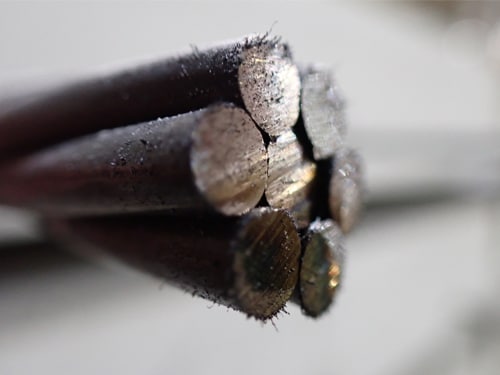
ASTM A416 is the standard specification for uncoated seven-wire steel strands used in prestressed concrete applications. The specification covers stress-relieved seven-wire strand intended for both pretensioned and post-tensioned prestressed concrete construction and defines two strength grades: Grade 250 and Grade 270, with minimum ultimate strengths of 250,000 psi (1725 MPa) and 270,000 psi (1860 MPa), respectively.
This standard outlines the requirements for the mechanical properties, manufacturing processes, and quality control measures to ensure the performance and durability of steel strands in structural applications. It also contains supplemental requirements for low-relaxation strand intended for applications where long-term stress losses must be minimized. The specification is critical for ensuring the safety and longevity of prestressed concrete elements.
This webpage provides an overview of ASTM A416, but it is recommended that users refer to the full ASTM A416 standard for complete details on procedures and requirements.
ASTM A416 Properties of Interest
The key mechanical properties outlined in ASTM A416 include:
Breaking Strength: The tensile strength of the steel strand at fracture, typically expressed in pounds per square inch (psi) or megapascals (MPa). Breaking strength requirements vary by strand diameter and grade and are determined in accordance with ASTM A370 mechanical testing procedures.
Yield Strength: Measured using the 1% extension-under-load method and required to be not less than 85% of the specified minimum breaking strength for standard strand.
Elongation: The minimum percentage of elongation required, indicating the ductility of the strand. ASTM A416 requires a minimum total elongation of 3.5% under load, measured over a gauge length of at least 24 inches (610 mm).
Relaxation: The amount of stress loss over time under a constant load, which is crucial for maintaining prestressing forces. For low-relaxation strand, relaxation loss after 1000 hours must not exceed 2.5-3.5% when loaded to 70-80% of specified minimum breaking strength.
ASTM A416 Testing Setup and Method
Testing according to ASTM A416 requires specific equipment:
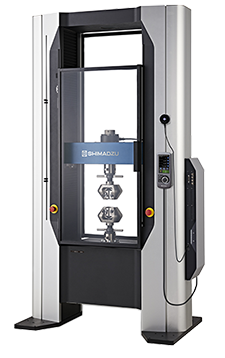
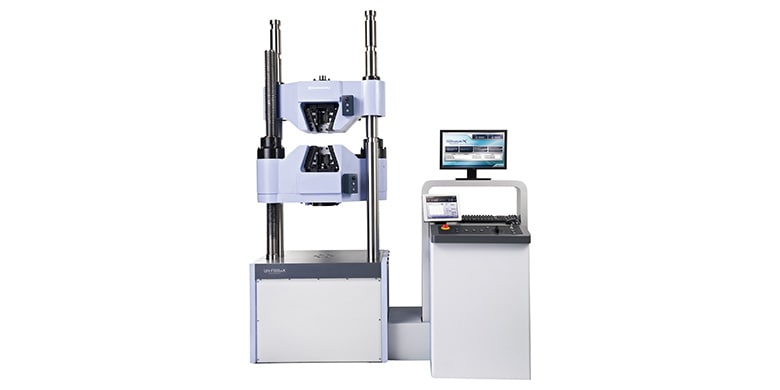
Universal Testing Machine (UTM): Used to apply tensile loads to the steel strands, measuring tensile strength and elongation. Testing is performed in accordance with ASTM A370.
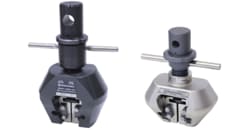
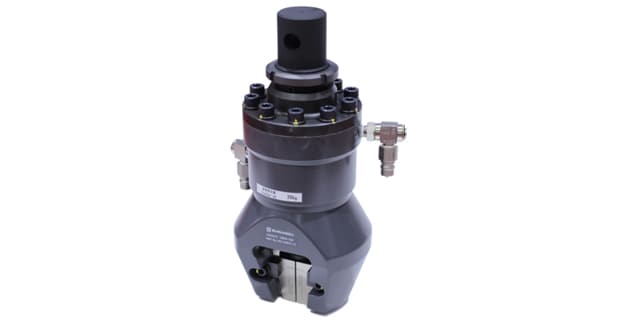
Hydraulic or Mechanical Grips: These grips securely hold the specimen in place during the test, ensuring no slippage occurs as tensile forces are applied.
Load Cells: Provide precise measurement of the tensile force applied to the specimen.
Extensometers: Required for determining yield strength and elongation. ASTM A416 specifies that extensometers used for yield testing must be calibrated with the smallest division not larger than 0.0001 in./in. of gauge length.
ASTM A416 Software Features
-
The testing software is a crucial component for ASTM A416 testing, TRAPEZIUMX-V offers the following features:
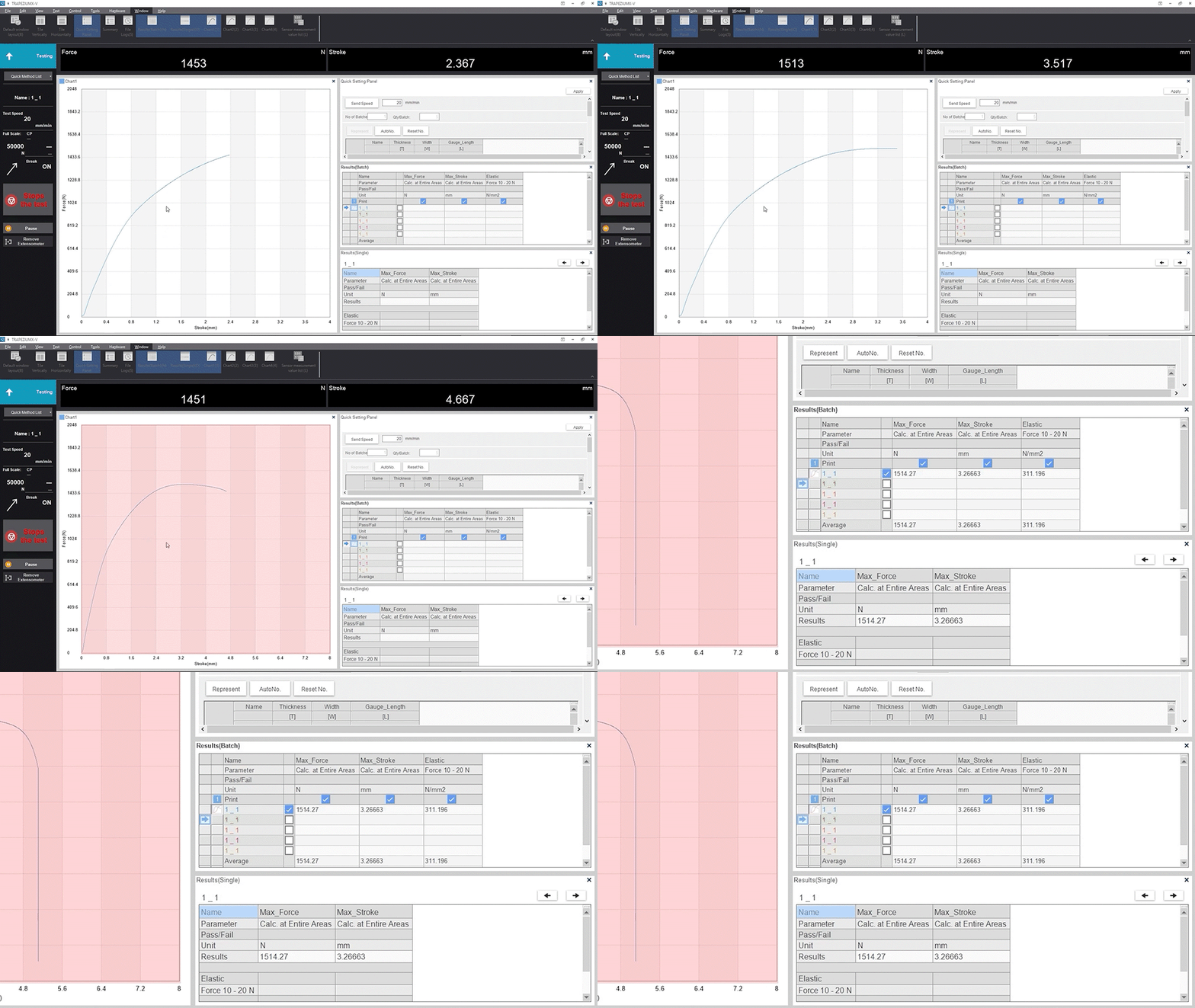
Data Acquisition System: Captures load and elongation data during testing, providing real-time insights into mechanical properties. This helps determine yield strength and elongation requirements specified by ASTM A416.
Automated Reporting: Generates comprehensive reports summarizing test results, including tensile strength and elongation values. Reports document strand grade, diameter, breaking strength, yield strength, lot identification, and low-relaxation results where applicable.
Statistical Analysis Tools: Provides capabilities for analyzing multiple test results to ensure consistency and quality control, assisting manufacturers in verifying conformance of production lots sampled in accordance with ASTM A416 requirements.
-
ASTM A416 Specimen Details
Specimen preparation for ASTM A416 involves:
Strand Selection: Uncoated seven-wire strands should be selected based on the relevant specifications outlined in ASTM A416. Test specimens are taken from finished production lots of strand, with one specimen required from each 20 ton (18 Mg) production lot.
Conditioning: Strands should be conditioned to ensure they are free from defects and contaminants before testing. The finished strand must be uniform in diameter, free of imperfections inconsistent with good commercial stranding practice, and shall not be oiled or greased. Slight rusting is permissible provided it does not produce pits visible to the naked eye.
Strand Construction: Each strand consists of a center wire enclosed tightly by six helically placed outer wires with a uniform pitch ranging from 12 to 16 times the nominal strand diameter. The diameter of the center wire must be larger than that of any outer wire as specified by the standard.
Sampling Location: Test specimens are typically cut from the outside end of reels or from either end of coils or reel-less packs. Any specimen containing a wire joint must be discarded and replaced with a new specimen.