


Analysis of Metals in Wastewater
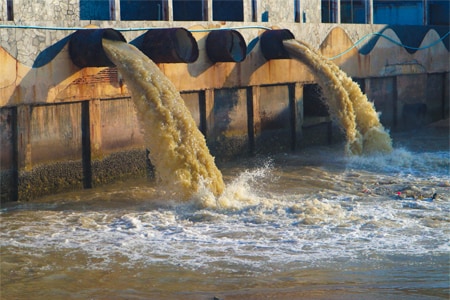
Discharge of priority pollutant metals into US waters is regulated under the Clean Water Act. Facilities with effluents entering a navigable waterway must obtain a NPDES permit. Additionally, facilities of sufficient water use that discharge into a sewer system (pretreatment) are permitted by the wastewater treatment plant. Maximum Contaminant Levels (MCLs) listed in the permit vary often depending on the volume of the discharge in relation to the volume of the receiving stream. Pretreatment samples may have very high MCLs compared to discharges directly into US waterways.
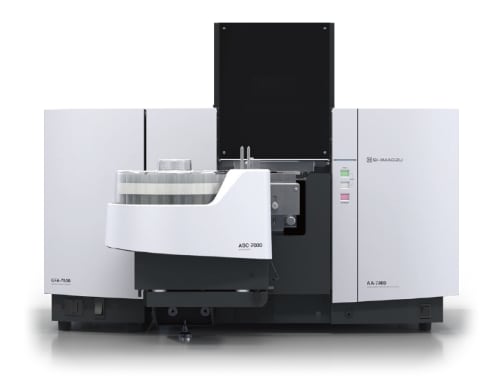
AA-7800 Atomic Absorption Spectrophotometer
Except for chromium VI, wastewater samples for metals must be digested and determined as “total metals”. Permits require that the technique used is sensitive enough to measure below the maximum contaminant level (MCL). For this reason, we rarely recommend flame Atomic Absorption methods, unless you have only a few samples for one or two elements and the MCL is high enough. For lower concentrations, electrothermal atomization or hydride generation is sufficient, however, throughput is slow relative to ICP methods. The Shimadzu AA-7800 is capable of all atomization approaches including the flam AA methods, graphite furnace by Standard Methods 3113B or EPA 200.9, and hydride generation by Standard Methods 3114.
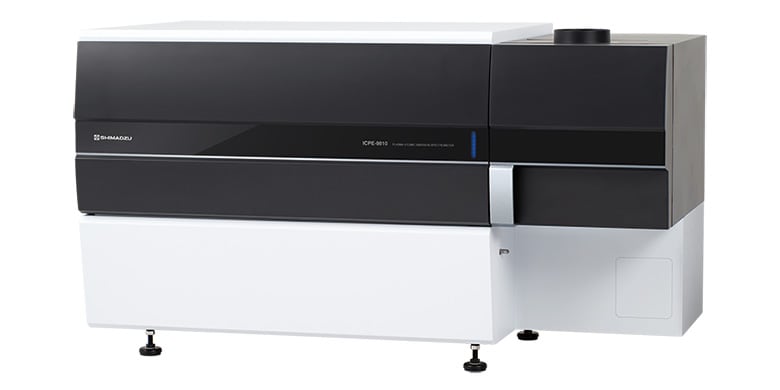
ICPE-9800 Series Multitype ICP Emission Spectrometer
Inductively Coupled Plasma – Atomic Emission Spectrometer (ICP-AES) is faster than AA and an ideal technique to do major and minor metals in wastewater. It is particularly useful in laboratories that must run a lot of metals per sample. EPA Method 200.5 is an axial ICP view for lower concentrations of some metals, and EPA Method 200.7 is a radial view. Both methods and views are allowed in wastewater. The Shimadzu ICPE-9800 is a unique ICP-AES spectrometer that enables both axial and radial views for simultaneous trace and high-concentration analysis and with a vertical torch. The vertical torch minimizes contamination, shortening analysis times and lengthening intervals between maintenance.
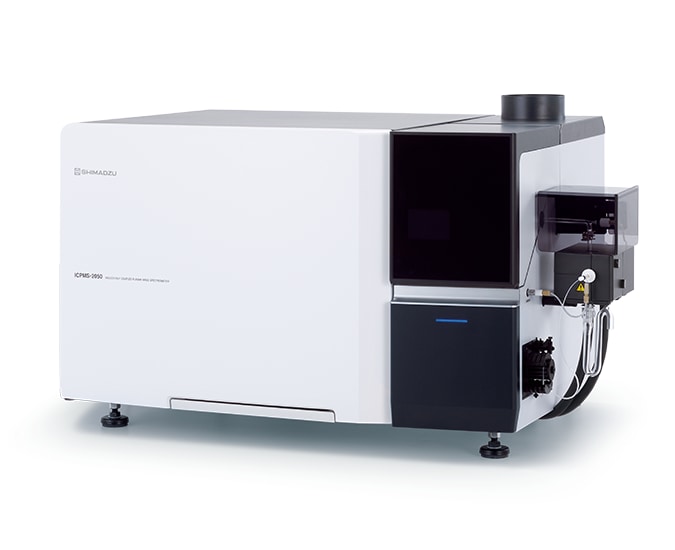
ICPMS-2040 / ICPMS-2050 Series Inductively Coupled Plasma Mass Spectrometer
Inductively Coupled Plasma – Mass Spectrometry (ICP-MS) is a powerful tool used for the analysis of trace, minor, and major metals in wastewater. It is particularly useful for laboratories that need to run a lot of metals in a lot of samples. The Shimadzu ICPMS-2040 and ICPMS-2050 series includes interelement correction (IEC), collision cell technology (CCT), reaction cell technology (RCT), and half-mass correction interference removal technology (IRT), ensuring accurate results, even in the most demanding samples. An aerosol dilution system enables aspiration of samples containing very high dissolved solids directly into the plasma. Other features include an advanced mini-torch design that keeps argon consumption low yet nearly doubles sensitivity and reduces injector clogging.