

Analysis of VOCs, SVOCs, and Pesticides in Wastewater
Priority pollutant toxic organics are regulated under the Clean Water Act. Industries and Publicly Owned Treatment Works (POTWs) that potentially release toxic organics must obtain an NPDES permit that specifies the MCLs for specific organics. Industry discharging into the POTW are issued pretreatment permits by the POTW. The priority pollutant organics include compounds, such as aromatics, phenols, polynuclear hydrocarbons, and organochlorine pesticides. The analysis for these pollutants is split by chemical characteristics based on the techniques used to extract and analyze them. Generally, one group is termed volatile organic compounds (VOCs) and analyzed by purge and trap (P&T) gas chromatography mass spectrometry (GCMS) and the remaining group termed semi volatile organic compounds (SVOCs) are analyzed by liquid or solid phase extraction followed by GCMS. The methods were initially promulgated in 1984 as Methods 624 and 625 for VOCs and SVOCs respectively. Minor revisions promulgated in 2017 updated the methods to 624.1 Purgeables by GCMS and 625.1 Base/Neutrals and Acids by GCMS, and these methods, or their Standard Methods equivalents 6200B and 6410B respectively, are required for all NPDES or pretreatment compliance reporting.
Volatiles
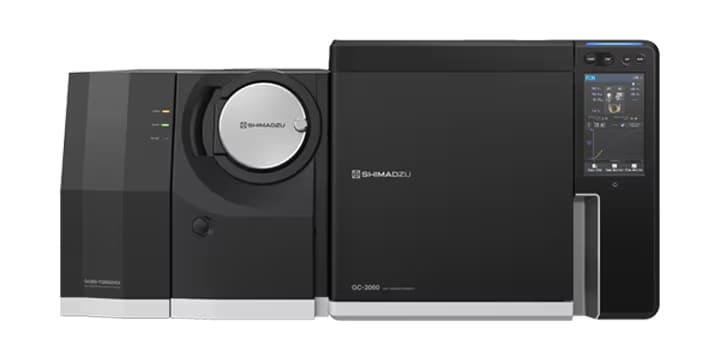
VOCs in wastewater must be analyzed by methods approved at 40 CFR Part 136. These methods require sample introduction by Purge and Trap followed by GC with specific or mass spectrometry detectors. Most laboratories analyze VOCs in wastewater using Method 624.1, and a few labs use SM 6200B. Both of these methods are P&T followed by GC-MS methods and are operationally similar. The methods may include specific operating conditions for the P&T, however, 40 CFR Part 136.6 Method modifications and analytical requirements provide flexibility to modify P&T conditions and to use Selected Ion Monitoring (SIM) for better sensitivity in place of full scan mode. A modern GC-MS, such as the Shimadzu GCMS-QP2020 NX or the GCMS-QP2050 equipped with a P&T is fully capable of running these methods and easily achieving the detection limits required by the methods.
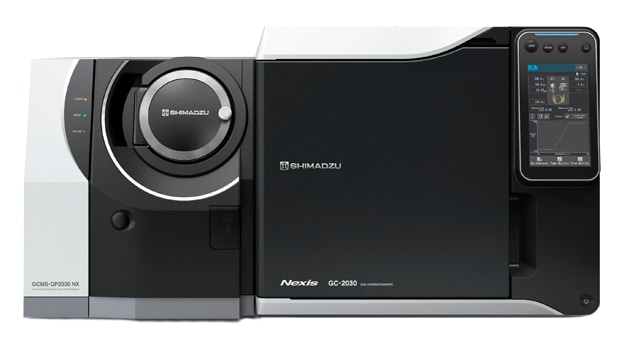
GCMS-QP2020 NX Single Quadrupole GC-MS
The Shimadzu GCMS-QP2020 NX Single Quadrupole GC-MS is our most sensitive, versatile instrument with enhanced sensitivity. The robust vacuum system improves water removal (important for P&T methods) and enables alternative carrier gases like hydrogen and even nitrogen. High speed scanning and data acquisition allows shortened analytical runs without compromising minimum requirements for integrations per peak.
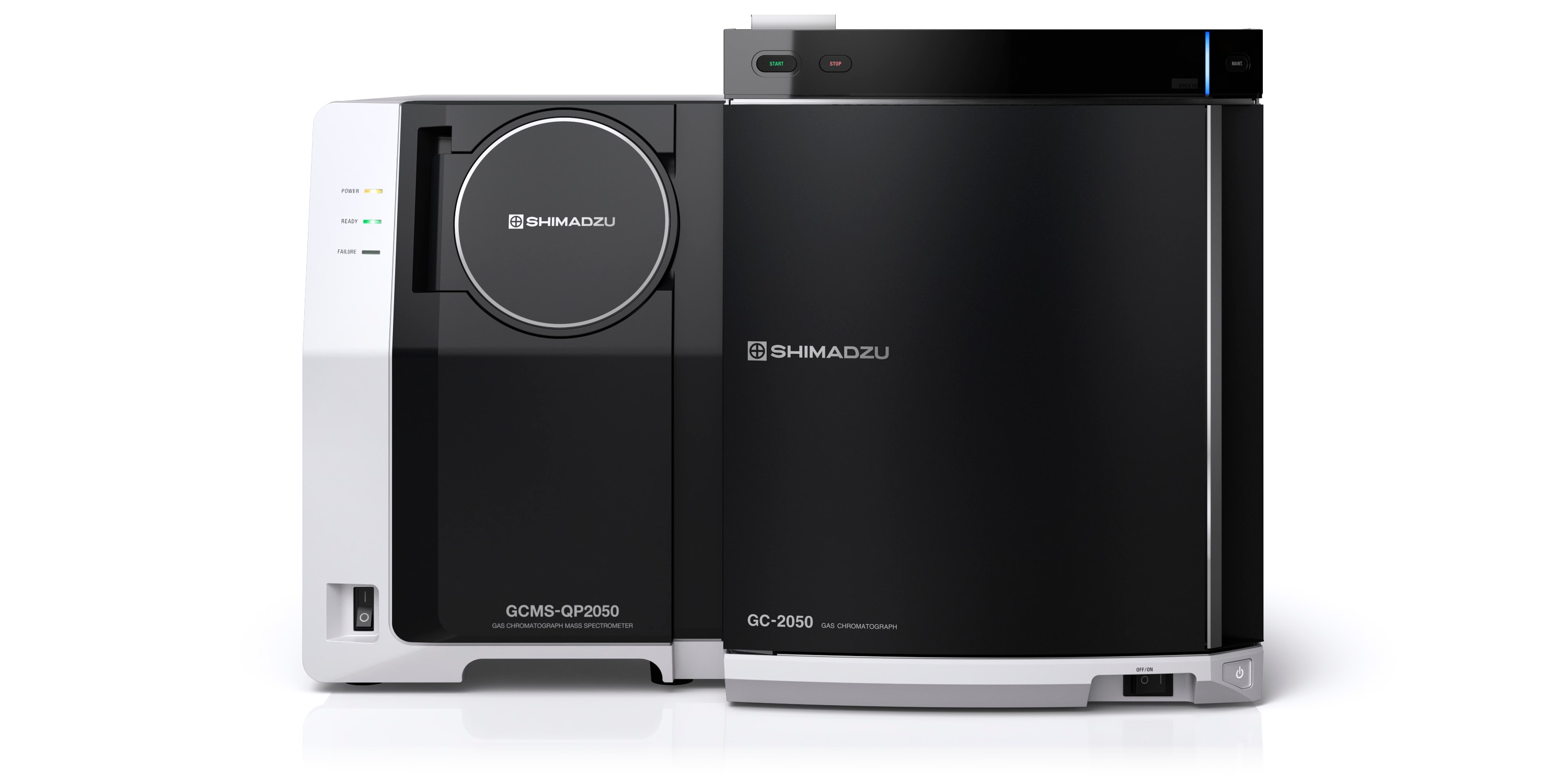
GCMS-QP2050 Single Quadrupole GC-MS
The Shimadzu GCMS-QP2050 Single Quadrupole GC-MS is our latest GC-MS technology allowing you to pair this detector with any existing GC you may already have. Of course, we recommend pairing with our own Nexis GC-2030 or the compact Brevis GC-2050 for optimum performance and software control.
SVOCs
SVOCs in wastewater must be analyzed by methods approved at 40 CFR Part 136. These methods require liquid:liquid sample extraction or Solid Phase Extraction (SPE) followed by GC-MS. Most laboratories analyze SVOCs in wastewater using Method 625.1, and a few labs use SM 6410B. Both of these methods are operationally similar. 40 CFR Part 136.6 Method modifications and analytical requirements provide flexibility to use Selected Ion Monitoring (SIM) for better sensitivity in place of full scan mode. Because of a recent regulation reducing methylene chloride exposure limits, many laboratories are scaling down methylene chloride usage by extracting smaller sample volumes than the 1000 mL nominal volume specified in the methods. The minimum volume currently allowed by Method 625.1 is 100 mL. Using 100 mL enables labs a 10 times reduction of methylene chloride use, however, challenges older instrument ability to reach the required detection limits. A modern GC-MS, such as the Shimadzu GCMS-QP2020 NX or the GCMS-QP2050 is fully capable of running these methods and easily achieving the detection limits required by the methods, even with a 100 mL extraction volume.
GCMS-QP2020 NX Single Quadrupole GC-MS
The Shimadzu GCMS-QP2020 NX Single Quadrupole GC-MS is our most sensitive, versatile instrument with enhanced sensitivity. The robust vacuum system enables alternative carrier gases like hydrogen and even nitrogen. High speed scanning and data acquisition allows shortened analytical runs without compromising minimum requirements for integrations per peak. Alternative ionization capability and the Boosted Efficiency Ion Source (BEIS) are two ways to improve sensitivity and reach low detection limits and still maintain compliance with the EPA methods.
GCMS-QP2050 Single Quadrupole GC-MS
The Shimadzu GCMS-QP2050 Single Quadrupole GC-MS is our latest GC-MS technology allowing you to pair this detector with any existing GC you may already have. Of course, we recommend pairing with our own Nexis GC-2030 or the compact Brevis GC-2050 for optimum performance and software control. The easily replaceable DuraEase ion source, long filament life, and contaminant resistant ion optical system are just a few features making this instrument ideal for analysis of SVOCs in wastewater samples.
SVOCs Using Small Volume Extraction
SVOCs may also be analyzed by triple quadrupole GCMS, or GC-MS/MS which can lower detection limits and significantly decrease the volume of sample required to reach EPA detection limits. However, though specified as an allowed alternative for Hazardous Waste SW-846 Method 8270E, MS/MS is not specifically named as an allowed alternative detector for Method 625.1. Neither does 40 CFR Part 136.6 give clear direction on use of MS/MS as an alternative to full scan or SIM MS. For this reason, Shimadzu is working with the US EPA under 40 CFR Part 136.4 to develop new methods allowing MS/MS as a detector for method 625.1.
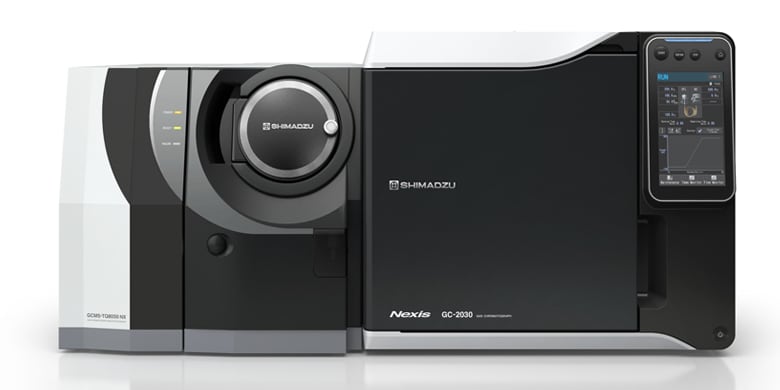
GCMS-TQ8050 NX Triple Quadrupole GC-MS
The Shimadzu GCMS-TQ8050 NX Triple Quadrupole GC-MS provides exceptional analytical capability for the reliable analysis of SVOCs in ultra-trace concentrations. The high sensitivity enables reductions to sample extraction volumes that significantly decrease the volume of methylene chloride needed. Besides SVOCs the instrument can be used for pesticides, nitrosamines, and dioxins and furans. Full scan, SIM, and scan MRM capabilities are also possible.
Pesticides
Seventeen (17) Organochlorine pesticides, toxaphene, and 8 PCBs are regulated by the Clean Water Act with required monitoring if they are listed in an NPDES or pretreatment permit. The approved GC methods are EPA Method 617 and 608.3, Standard Methods 6630B and C, and ASTM D3086 and D5812. These GC methods rely on electron capture, (GC-ECD) or halogen specific detectors. Of these, Method 608.3 is the most widely used. Two GCMS methods, EPA Method 625.1 and Standard Methods 6410B are also allowed, however, even with modern GCMS, the detection limits for the GCMS methods are generally too high for the MCLs of most permits. 40 CFR Part 136.6 Method modifications and analytical requirements do not allow changing a detector as an approved modification; therefore, you cannot use GC-MS/MS as a replacement detector for EPA Method 608.3. For this reason, Shimadzu developed ASTM D8543 Standard Test method for Determination of Pesticides and Polychlorinated Biphenyls (PCBs) in Aqueous Solution by Tandem Gas Chromatography / Mass Spectrometry/Mass Spectrometry (GC/MS/MS), and is working directly with EPA to develop an alternative test procedure for Method 608.3 to allow using the Shimadzu GCMS-TQ8050 NX Triple Quadrupole GC-MS. For even greater sensitivity, use the GCMS-TQ8050RX which includes a high efficiency detector, advanced noise reduction, and an optional Boosted Efficiency Ion Source (BEIS) increasing signal to noise for even lower detection limits.
GCMS-TQ8050 NX Triple Quadrupole GC-MS