

Analysis of Fragrance in Cosmetics and Personal Care Products

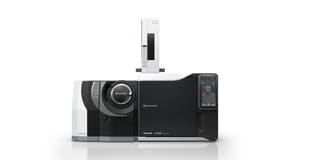
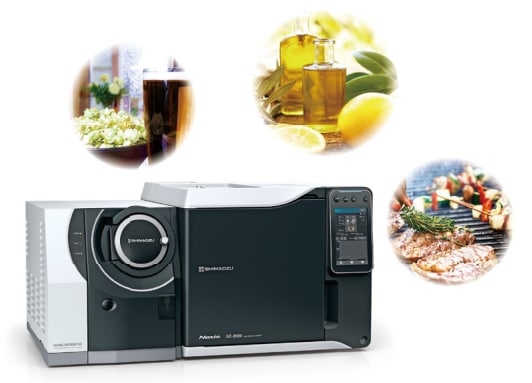
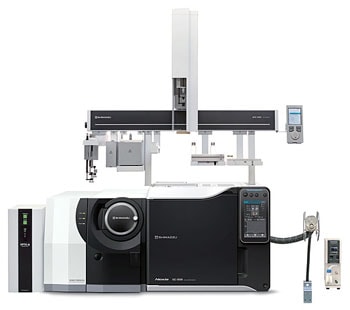
Fragrance analysis with Shimadzu is an augment to your expert perfumist. We offer GCMS instruments with dedicated fragrance databases for easy method development, but also a GC-olfactory system to integrate directly into your perfumist’s or flavorist’s workflows. We give your experts more tools to separate and isolate the fragrances you’re working with. Whether you need to match lots, compare competitors, or reproduce legacy products, we integrate our highly sensitive analysis platform with your expert abilities.
Featured Applications
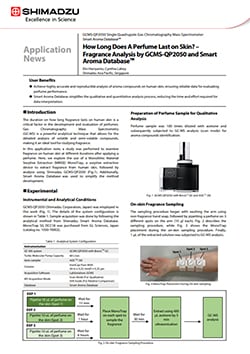
How Long Does A Perfume Last on Skin? – Fragrance Analysis by GCMS-QP2050 and Smart Aroma DatabaseTM
Analyze fragrance performance with an advanced analytical approach that reveals how perfumes evolve on skin over time. This study investigates key volatile fragrance compounds, including terpenes and aroma constituents such as linalool, limonene, enabling detailed tracking of scent composition as it changes after application. Understanding longevity, evaporation behavior, and note transitions is essential for designing products that deliver consistent and desirable sensory experiences. The methodology utilizes gas chromatography–mass spectrometry (GC-MS) to monitor fragrance components directly from skin over time. Analysis is performed using the Shimadzu GCMS QP2050 in combination with the Smart Aroma Database™, allowing high-resolution separation and precise identification of complex fragrance mixtures. This platform delivers comprehensive, time-resolved characterization of fragrance behavior, empowering formulators to optimize longevity, balance, and performance with scientific precision.
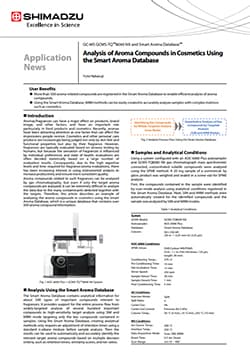
Analysis of Aroma Compounds in Cosmetics Using the Smart Aroma Database
Precise characterization of fragrance composition supports product differentiation, quality assurance, and consistency in sensory experience. This study focuses on a wide range of aroma compounds, including terpenes, esters, alcohols, aldehydes, and other volatile fragrance ingredients demonstrating fragrance analysis in cosmetic formulations. Analysis is performed using the Shimadzu GCMS with the Smart Aroma Database™, which provides automated compound identification through retention index and mass spectral matching. High-resolution separation and sensitive detection enable comprehensive profiling of trace-level aroma constituents. Showing fast, reliable, and highly automated identification of fragrance components, the Smart Aroma Database™ significantly streamlines data interpretation while enhancing accuracy empowering formulators to optimize scent design with confidence and scientific rigor.
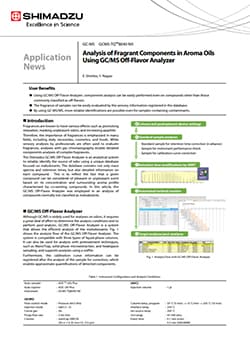
Analysis of Fragrant Components in Aroma Oils Using GC/MS Off-Flavor Analyzer
Fragrance characterization with a targeted GC MS approach designed for aroma oil analysis. This study focuses on a broad spectrum of fragrant components, including terpenes, esters, aldehydes, alcohols, and other volatile organic compounds, as well as trace off flavor or degradation compounds that influence overall scent quality. Gas chromatography–mass spectrometry (GC MS) with the off flavor analyzer workflow is employed, enabling efficient separation and identification of complex mixtures. Analysis is conducted using a Shimadzu GCMS QP series equipped with an Off Flavor Analyzer including dedicated spectral and database tools, providing automated method development for screening and identification of both desirable and unwanted components. Optimized GC MS conditions ensure high sensitivity and reliable detection across a wide range of volatiles. Simultaneous detection of key aroma compounds and trace off notes with high sensitivity and automation, empowers formulators to refine fragrance profiles, enhance product quality, and accelerate development with confidence.
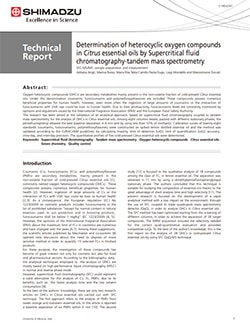
Determination of heterocyclic oxygen compounds in Citrus essential oils by Supercritical Fluid chromatography-tandem mass spectrometry
Discover a powerful, next-generation approach for profiling complex fragrance ingredients in citrus-based formulations. This study targets oxygen heterocyclic compounds (OHCs), including coumarins, furocoumarins, and polymethoxyflavones, a diverse class of secondary metabolites that strongly influence both the functional and safety properties of citrus essential oils. Photoactive furocoumarins require precise monitoring to ensure product safety, compliance, and consistent sensory performance due to strict regulatory limits in the cosmetics and fragrance industry. The study employs supercritical fluid chromatography coupled with tandem mass spectrometry (SFC MS/MS) for high-speed, high-selectivity analysis. Measurements are conducted using a Shimadzu Nexera™ UC SFC paired with the LCMS 8050 triple quadrupole mass spectrometer, operating in MRM mode for sensitive and selective detection. The method achieves full separation of 28 target compounds in under 8 minutes, with optimized temperature, pressure, and ionization conditions supporting robust quantitative analysis. Rapid, highly sensitive, and environmentally efficient analysis, enables accurate trace-level quantification with reduced solvent use which is ideal for routine quality control and advanced formulation development.
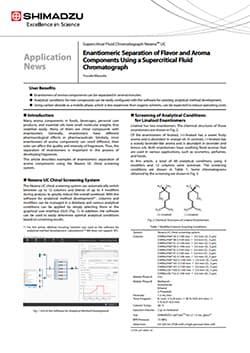
Enantiomeric Separation of Flavor and Aroma Components Using a Supercritical Fluid Chromatograph
Advanced chiral insight in fragrance science, this study looks at chiral flavor and aroma compounds, including alcohols, esters, terpenes, and other enantiomeric constituents that can exhibit distinct sensory characteristics depending on their stereochemistry. Understanding enantiomeric composition is essential for cosmetics and fragrance development, where subtle differences in molecular structure can significantly influence scent perception, authenticity, and product quality. The methodology employs supercritical fluid chromatography (SFC) for efficient enantiomeric separation. Analysis is performed using a Shimadzu Nexera™ UC Supercritical Fluid Chromatograph, equipped with chiral stationary phase columns to resolve optical isomers with high precision. Fast, selective chiral separation with reduced solvent consumption, enabled precise characterization of enantiomers while supporting sustainable, high-throughput workflows for advanced fragrance formulation and quality control.
Analysis of Aroma Components in Essential Oils with AOC™-30i
Essential oils are widely used additives and precise characterization of aroma profiles is critical for product consistency, sensory quality, and formulation optimization. This study focuses on key aroma compounds in peppermint oil, including terpenes and oxygenated constituents such as β pinene, limonene, eucalyptol, menthol, menthone, and related components that define fragrance quality and performance. We used gas chromatography with flame ionization detection (GC FID) to analyze essential oils directly using optimized injection control for viscous samples. Analysis is performed on the Shimadzu Nexis™ GC 2030 coupled with the AOC™ 30i autosampler, utilizing tailored injection parameters to ensure stable, reproducible sample introduction. Accurate, reproducible analysis of highly viscous essential oils without dilution empowers reliable, high throughput fragrance analysis, minimizing sample preparation while maintaining excellent repeatability and reducing carryover.