

Analysis of Active Ingredients in Cosmetics and Personal Care Products
The core components of cosmetics and personal care products (PCPs) are active ingredients. We know that as more consumers desire cleaner label products, every ingredient is scrutinized for necessity and what benefits it can impart to the product, and to your customers. Our analytical catalogue, including GC, GCMS, LC and LCMS technologies can help you determine effectiveness, purity, and work towards developing the right component mixtures to get your formulations just right. Explore our work on fragrances, sunscreens, antimicrobials, dyes and pigments, and a wide variety of active ingredients.



Featured Applications
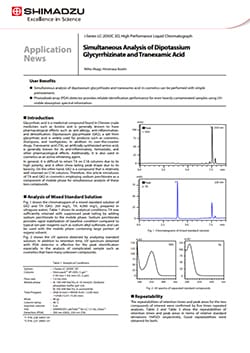
Simultaneous Analysis of Dipotassium Glycyrrhizinate and Tranexamic Acid
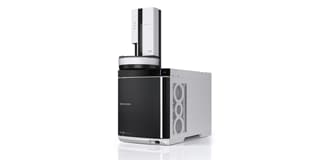
A robust, high-precision approach for the simultaneous analysis of dipotassium glycyrrhizinate (GK2) and tranexamic acid (TA). These are two widely used active ingredients in cosmetics known for their anti-inflammatory, whitening, and skin-protective properties. Their accurate quantification is critical to ensuring product efficacy and regulatory compliance in the cosmetics industry. Using high-performance liquid chromatography (HPLC), the method overcomes traditional challenges by incorporating sodium perchlorate into the mobile phase, enabling effective separation and peak shape control. Analytical conditions include a Shim-pack™ VP-ODS column (150 × 4.6 mm, 5 µm), and PDA detection at 250 nm (GK2) and 220 nm (TA). This Shimadzu i-Series LC-2050C 3D HPLC is paired with a photodiode array (PDA) detector, which delivers high sensitivity, spectral confirmation, and reliable identification, even in complex cosmetic matrices. This integrated workflow offers excellent repeatability, strong linearity (r² ≥ 0.9999), and simplified sample preparation, empowering laboratories to confidently analyze multi-component formulations with speed and precision.
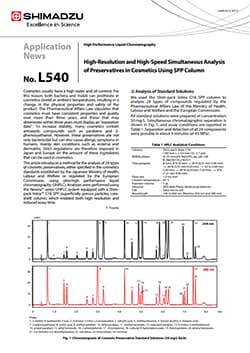
High-Resolution and High-Speed Simultaneous Analysis of Preservatives in Cosmetics Using SPP Column
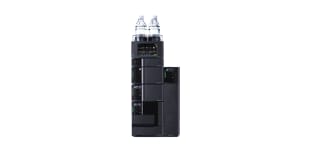
Regulatory compliance and product safety are necessary in cosmetics production. This study showcases a powerful, high-speed method for the simultaneous analysis of 24 commonly regulated cosmetic preservatives, including parabens (methyl-, ethyl-, propyl-), phenoxyethanol, and triclosan: key compounds that ensure product stability but require strict control due to potential allergenic effects. The Nexera HPLC/UHPLC with Photodiode Array Detector - SPD-M40 leverages flexibility to meet the demand for accurate quantification of preservatives across complex formulations. Using ultra-high performance liquid chromatography (UHPLC), the method achieves rapid, high-resolution separation of all components in approximately 9 minutes. The Core-shell (SPP) column enables sharper peaks, higher theoretical plate counts, and lower backpressure, providing fast, reliable, and high-resolution analysis ideally suited for complex cosmetic matrices. Analytical conditions include a Shim-pack Velox™ C18 SPP column (100 × 3.0 mm, 2.7 µm), with PDA detection across 190–800 nm. The analysis is performed on the Shimadzu Nexera™ UHPLC with an SPD-M40 photodiode array detector, delivering exceptional sensitivity and spectral confirmation.
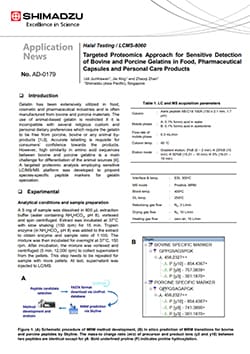
Targeted Proteomics Approach for Sensitive Detection of Bovine and Porcine Gelatins in Food, Pharmaceutical Capsules and Personal Care Products
This study presents a cutting-edge targeted proteomics approach for the sensitive detection of bovine and porcine gelatin-derived peptides, key additives widely used across food, pharmaceutical, personal care, and cosmetics products. Accurate identification is essential for regulatory compliance, labeling transparency, and meeting consumer expectations related to dietary and ethical preferences. The methodology employs LC/MS/MS with multiple reaction monitoring (MRM) to differentiate highly similar peptide sequences unique to each gelatin source. Sample preparation includes enzymatic digestion with trypsin, followed by separation on an Aeris peptide XB-C18 column. Analysis is performed using the Shimadzu LCMS-8060, delivering exceptional sensitivity and selectivity. Its advanced MRM capability enables reliable identification of species-specific peptides even in complex cosmetic matrices and at trace levels (down to 0.1% adulteration). This powerful platform provides laboratories with a robust solution for high-confidence gelatin speciation, supporting quality assurance and compliance in modern cosmetic product development.
Analysis of Carboxymethyl Cellulose Using an Integrated HPLC System
A robust analytical approach is presented for the characterization of carboxymethyl cellulose (CMC), a widely used polymer in cosmetic formulations as a thickener, stabilizer, and texture modifier. Accurate analysis of CMC is critical for ensuring consistent product performance, stability, and regulatory compliance across personal care products. The study employs integrated high-performance liquid chromatography (HPLC) to evaluate CMC, enabling efficient separation and characterization of polymer-related components. Analysis is performed using the Shimadzu i-Series integrated HPLC, designed to streamline workflows through automated operation and compact system integration. The i-Series platform offers high reproducibility, simplified operation, and reliable data integrity, making it particularly well-suited for complex macromolecular analyses such as CMC. This enables laboratories to achieve consistent, high-quality results with minimal manual intervention, supporting both research and quality control in modern cosmetics development.
Simple Screening Analysis of Detergent Using a Single Quadrupole Mass Spectrometer
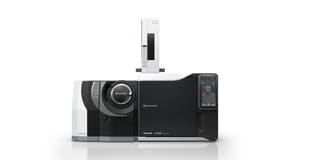
Surfactants are employed in a variety of personal care and cleaning products, including cleansers, wipes, concentrates, and soaps. Detergent formulations are simplified with this innovative screening approach leveraging single quadrupole LC-MS technology. The study focuses on key detergent components, particularly surfactants such as alkylamine oxides (C12), polyoxyethylene alkyl ethers (nonionic surfactants), and stabilizing agents like butyl carbitol, which are critical to performance and skin compatibility. This methodology enables precise characterization of formulation ingredients that are vital for optimizing mildness, efficacy, and product safety in skin-contact applications. The workflow employs flow injection analysis coupled with multivariate statistical processing for ultra-fast screening (about 1 minute per sample). The Shimadzu Nexera™ LC paired with the LCMS-2050 single quadrupole mass spectrometer, supported by LabSolutions™ LCMS and eMSTAT Solution™ software were used, delivering exceptional robustness, ease of maintenance, and high-throughput capability, making it ideal for routine screening, formulation development, and quality control in complex surfactant-based products.