


Semiconductor Solutions
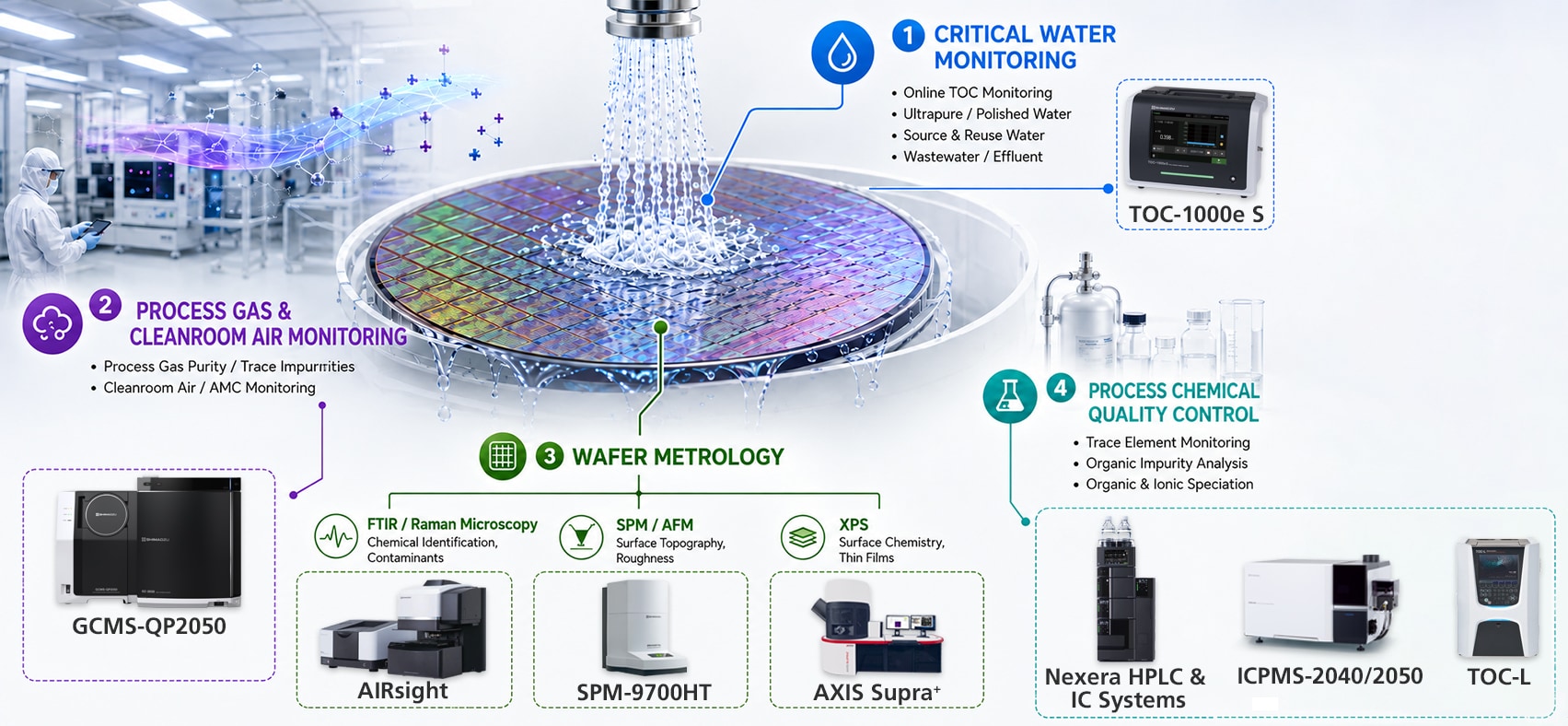
Semiconductor manufacturing depends on tight control of material and environmental contacts to the wafer. Trace organic compounds in ultrapure water, impurities in process gases, airborne molecular contamination (AMC), nanoscale surface variation, and metallic contamination can affect process stability, device reliability, and yield. Shimadzu provides analytical instrumentation for fab facilities, process development, quality control, environmental monitoring, and failure analysis—from online TOC monitoring and application-specific GC systems to GC-MS, FTIR/Raman microscopy, and scanning probe microscopy. These complementary solutions help engineers characterize contamination sources, verify incoming materials, investigate excursions, and generate actionable data for continuous improvement.
Semiconductor Water Quality and Contamination Control
On-line Ultrapure Water Monitoring
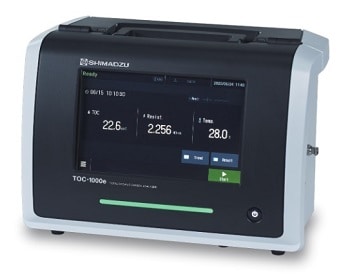
Ultrapure water (UPW) contacts wafer surfaces throughout cleaning and rinsing, making low-level organic contamination a critical process-control concern. The Shimadzu TOC-1000e S provides real-time online total organic carbon monitoring for advanced semiconductor UPW systems, including hard-to-oxidize compounds such as urea. It offers a 0.02 µg/L detection limit, a five-minute minimum measurement cycle, and fast response to contamination events. UPW quality programs can be developed around guidance such as SEMI F63, SEMI F75, and ASTM D5127 for system performance, monitoring, and electronics-grade water quality.
Source, Reclaimed, and Wastewater Analysis
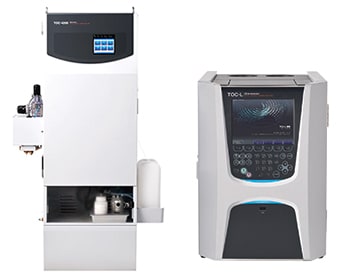
Source water, reclaimed water, process effluent, and final discharge streams can vary significantly in organic contamination and require reliable monitoring across changing water quality conditions. The TOC-4200 online TOC analyzer uses 680 °C catalytic combustion oxidation for continuous monitoring, with a four-minute minimum measurement cycle, automatic dilution, multi-stream sampling, and options for high-salt or suspended-solids samples. The laboratory TOC-L complements online monitoring for confirmatory analysis and high-salt samples, using the same 680 °C combustion principle for difficult sample matrices.
For facilities that also require elemental data, the ICPMS-2050 extends water-quality monitoring to trace metals across source, waste, and reuse streams supporting elemental contaminant tracking and evaluation of treatment performance.
Learn More About the TOC-4200 Learn More About the TOC-L/env-pfas-main-v2.jpg)
Environmental Water and PFAS Monitoring
PFAS monitoring in semiconductor manufacturing is currently centered on environmental, wastewater, and regulatory programs rather than routine UPW process control. Fabs are also tracking PFAS use, material disclosure, supply-chain traceability, and treatment or substitution strategies. Shimadzu LC-MS/MS solutions support targeted PFAS analysis in non-potable water using workflows such as EPA Method 1633A and ASTM D8421.
Process Gas Purity and Cleanroom Air Monitoring
Process Gas Purity and Trace Impurity Analysis
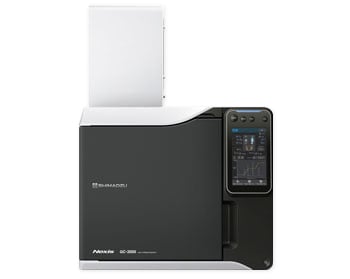
Trace impurity analysis of bulk and specialty gases helps fabs identify unwanted components that can alter process chemistry, contaminate equipment, or complicate root-cause investigations. Shimadzu application-specific GC systems can be configured to separate and quantify permanent gases, light hydrocarbons, and other trace components in high-purity gas streams. Automated valve switching and sample-line selection support repeatable testing across multiple gas lines, while detector options are selected for the target compounds and required sensitivity. These systems support incoming gas qualification, supplier quality control, and at-line verification within semiconductor facilities.
Clean Room Air Monitoring
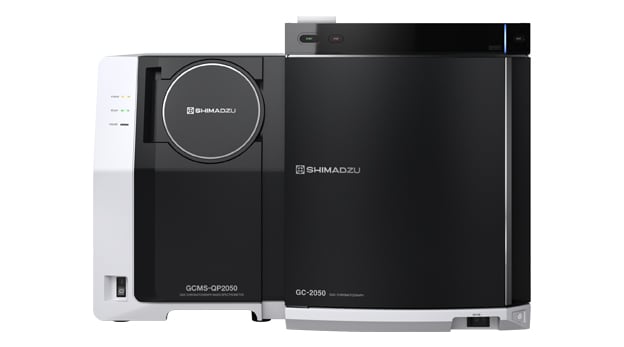
Airborne molecular contamination (AMC) from volatile and semi-volatile organic compounds can deposit on wafers, optical surfaces, and process equipment. Shimadzu's GCMS-QP2050 Single Quadrupole GC-MS, paired with appropriate air-sampling approaches such as sorbent tubes, canisters, or thermal desorption, separate, identify, and quantify trace organic compounds in cleanroom air. Scan and selected-ion monitoring workflows support both targeted monitoring and investigation of unexpected contaminants. The result is a practical tool for cleanroom qualification, excursion response, source identification, and evaluation of materials introduced into controlled environments.
Wafer Characterization, Surface Metrology, and Contamination Analysis
Molecular Identification with AIRsight FTIR/Raman Microscopy
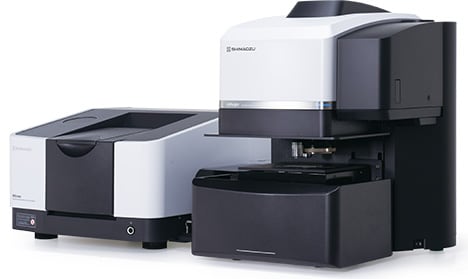
The AIRsight infrared/Raman microscope combines FTIR and confocal Raman measurements in one system, enabling complementary spectra to be collected from the same microscopic location without moving the sample. This capability can help identify organic residues, polymers, carbon-based materials, and inorganic particles associated with wafer defects or process contamination. Shared software, spectral libraries, and infrared/Raman mapping help analysts compare chemical signatures, distinguish visually similar materials, and build internal contaminant libraries for faster failure analysis and process troubleshooting.
Localized Nanoscale Surface Metrology with the SPM-9700HT Plus
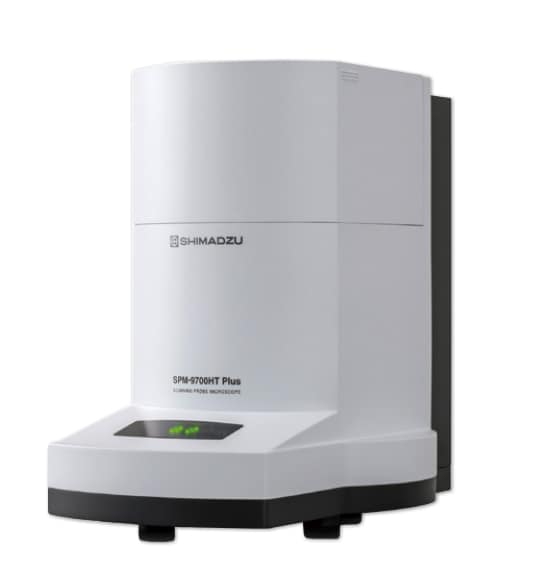
The SPM-9700HT Plus provides three-dimensional surface imaging and localized physical-property measurements using scanning probe microscopy and atomic force microscopy. Semiconductor laboratories can apply it to nanoscale surface roughness, step profiles, particles, scratches, film morphology, and changes associated with deposition, etching, cleaning, or chemical mechanical planarization. NanoAssist automatically optimizes observation conditions, while the high-throughput scanner and Nano 3D Mapping Fast functions shorten data acquisition and physical-property mapping. The system is well suited to R&D, process development, and failure analysis.
Surface Chemistry and Thin-Film Characterization with XPS
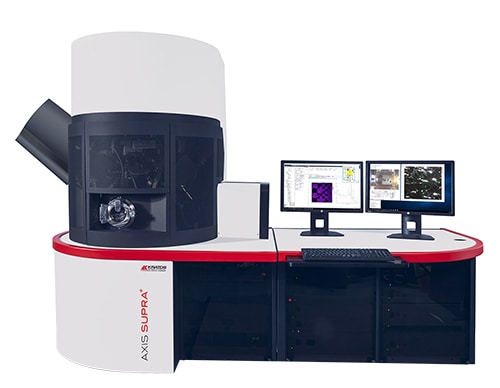
The AXIS Supra+ imaging X-ray photoelectron spectrometer extends wafer characterization beyond surface shape to elemental composition and chemical state. XPS provides highly surface-sensitive analysis for evaluating thin films, oxide layers, residues, and changes in surface chemistry associated with semiconductor processing. Angle-resolved XPS combined with advanced data analysis can provide depth-distribution information within the near-surface region without conventional sputter depth profiling, supporting characterization of multilayer structures and other advanced wafer surfaces.
Semiconductor Process Chemical Quality Control
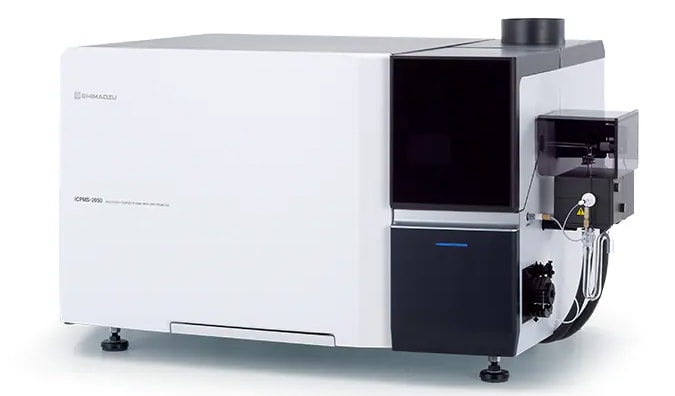
Trace Element Monitoring for Semiconductor Process Chemicals
Semiconductor chemical suppliers must control metallic impurities throughout production, from incoming raw materials and feedstocks through purification intermediates and selected product quality-control workflows. The Shimadzu ICPMS-2050 provides multi-element trace analysis for applications requiring ppb-level monitoring, helping laboratories assess lot-to-lot consistency, identify contaminant sources, and track elements such as Na, Fe, Al, Ca, Mg, Cu, Ni, and Cr through purification processes. Collision/reaction-cell technology adds flexibility for managing spectral interferences in challenging chemical matrices.
The ICPMS-2050 also supports the matrix and workflow demands common to process-chemical laboratories. An optional HF-resistant sample introduction system enables analysis of hydrofluoric acid-containing samples, while configurations are available for organic solvents and higher-matrix samples. ProActive and Extended Rinsing help reduce analysis time and minimize carryover between samples, supporting efficient routine QC across diverse semiconductor process chemical production.
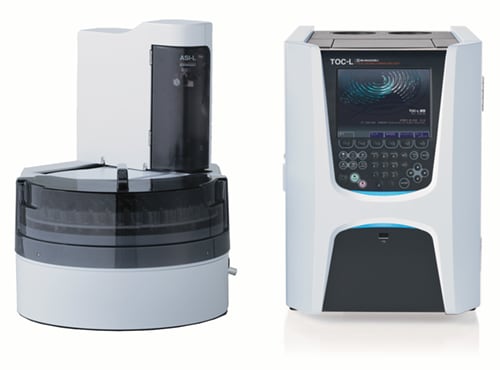
Organic Impurity Analysis in Semiconductor Process Chemicals
For aqueous semiconductor process chemicals such as sulfuric acid and hydrogen peroxide solutions, total organic carbon provides a direct measure of bulk organic contamination. The Shimadzu TOC-L uses combustion-based TOC analysis for laboratory quality control and process-development workflows, including measurement of organic impurities in sulfuric acid. Shimadzu semiconductor application literature also includes TOC/TN measurement of aqueous hydrogen peroxide in wet-processing workflows.
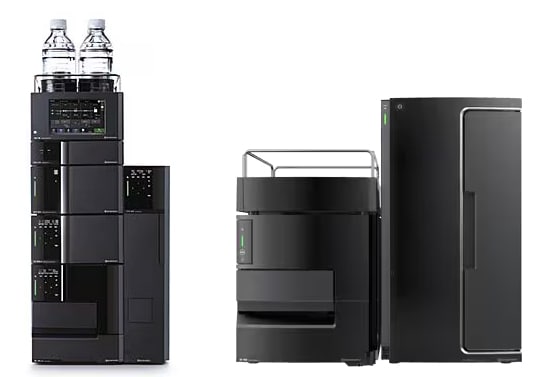
Organic and Ionic Speciation in Process Chemicals and Water
Bulk measurements can indicate overall contamination, but process control and troubleshooting often require identification and quantitation of individual chemical species. Shimadzu Nexera HPLC/UHPLC systems provide compound-specific analysis of nonvolatile and polar organic components in process chemicals and water, supporting applications such as organic acids, plating additives, and other formulation or degradation products. Flexible separation chemistries and detector configurations allow methods to be tailored to specific process-control and quality-control requirements.
For ionic contaminants, the Nexera IC ion chromatograph provides dedicated separation of inorganic anions and cations in aqueous samples, including species such as fluoride, chloride, nitrate, and sulfate. Suppressed conductivity detection and optional dual-injection capability support reliable anion and cation analysis for water-quality and process-stream characterization, complementing HPLC when ionic rather than molecular contaminants are the analytical target.