


Analysis of Per- and Polyfluoroalkyl Substances (PFAS)
-
PFAS is the generic name for organofluorine compounds. PFAS exhibit numerous unique properties, such as water and oil resistance, heat resistance, and chemical resistance that depend on the bond strengths between the fluorine (F) and carbon (C) elements contained in the compound. For these reasons, PFAS are used for a wide range of applications and products, such as water repellents, surface treatment agents, emulsifiers, fire extinguishing agents, and coatings. However, due to the strong bonds between the F and C atoms, PFAS do not readily break down, resulting in environmental persistence and accumulation in living organisms.
Some PFAS compounds suspected to be toxic, in particular PFOA and PFOS, have been listed as hazardous substances under the Comprehensive Environmental Response, Compensation, and Liability Act (CERCLA), also known as Superfund. EPA has also regulated PFOA and PFOS under the Safe Drinking Water Act (SDWA). Additionally, EPA has proposed several effluent limit guidelines setting the stage for regulation of PFAS in wastewater.
-
/env-pfas-main-v2.jpg)
Given the above circumstances, there is a need for the detection and analysis of PFAS in water, biosolids, soil, and other samples. Methods for PFAS primarily depend on using Liquid chromatography tandem mass spectrometry (LC-MS/MS), however, as needs arise to analyze other PFAS newer methods with different instrumental techniques may emerge. For the past decade, Shimadzu has been leading the way developing new PFAS analytical methods and new techniques in effort to provide you with solutions to reliably measure these persistent organic pollutants (POP) in a cost-effective manner.
To monitor trace amounts of PFAS, a wide variety of factors must be considered, such as the compounds' wide range of chemical properties and potential contamination from equipment and the surrounding environment. This process requires not only determining appropriate analysis conditions but also extensive expertise. Fortunately, when using standardized methods, Shimadzu has worked out analytical issues for you and is able to provide fully vetted method packages ensuring your laboratory a minimal learning curve to be up and running quickly and stay running with minimal downtime.
Instruments used for PFAS Analysis
Shimadzu's robust LC-MS/MS systems for PFAS testing in environmental matrices provide effective, consistent performance and the high-quality results needed to meet the analytical demands in modern laboratories. These instruments are specifically designed to let more analyte in while keeping contamination out to deliver industry-leading sensitivity, selectivity, and quantitative accuracy for targeted compound analysis for all methods, whether Solid Phase Extraction (SPE) or cosolvation (often called direct injection).
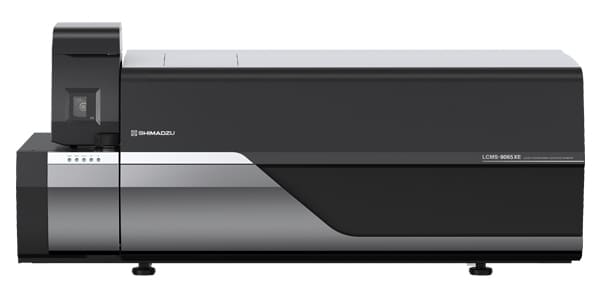
LCMS-8065XE Triple Quadrupole LC-MS/MS
Our newest instrument combines technological advancements to bring sample analysis to a new level. Through evolution of our UF technologies, ESI probe, and collision cell, we are pushing the boundaries to achieve the highest level of performance. StreamFocus ESI enhances UFsensitivity™ analysis by reducing droplet dispersion. This specially engineered low-diffusion nebulizer enables greater ion intake while reducing gas consumption—making it particularly well-suited for reducing operational expenses. IonFocus optimizes ion transmission solving the common trade-off between contamination and sensitivity loss by using an electrode that focuses and directs only the target ions into the mass spectrometer and excludes contaminants. This results in a high sensitivity instrument with exceptional uptime for reliable, long-term analysis. This instrument is particularly suited for the cosolvation (direct injection) methods, providing low detection limits and minimal contamination from highly contaminated samples.
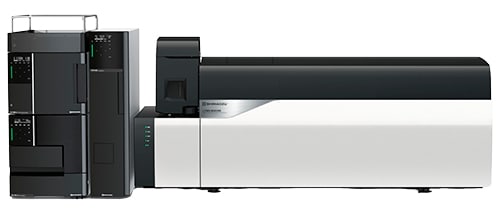
LCMS-TQ RX Series Triple Quadrupole LC-MS/MS
The LCMS-TQ RX series of triple quadrupole mass spectrometers provide you with robust and reliable results for PFAS and any other LC-MS/MS method. Rapid polarity switching, in just five milliseconds, enables analysis of positive and negative ions in one chromatogram; no need for separate analytical runs for pesticides, PPCP, or other analyses with target lists that require both positive and negative mode.
Choose between three instruments in the LCMS RX series to fit your application needs. Our premier instrument, the LCMS-8060RX, is highly sensitive. The LCMS-8050RX is also sensitive, providing high-speed analysis and precise results. Finally, the LCMS-8045RX is ideal for routine analysis, balancing sensitivity with a cost-effective price. The LCMS-TQ RX Series can be equipped with an APCI, DUIS™ or DPiMS ionization unit instead of the standard ESI unit offering a unique advantage to simultaneously ionize compounds using both ESI and APCI methods. All three ionization units share a simple design, allowing for effortless swapping between them to suit your specific analytical needs.
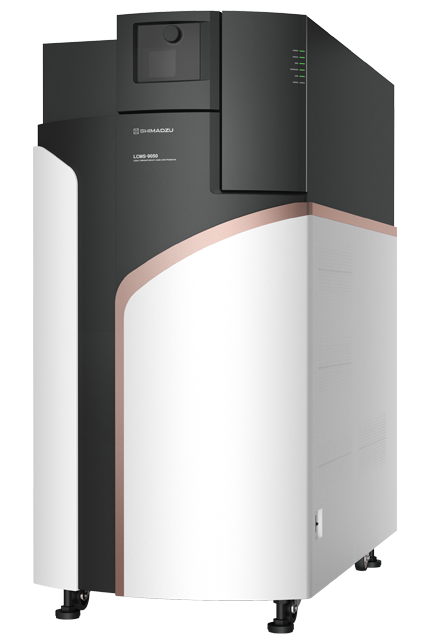
LCMS-9050 Quadrupole Time-of-Flight (Q-TOF) Mass Spectrometer
The LCMS-9050 delivers the highest possible levels of mass accuracy for dependable analysis of unknown analytes, or high-resolution mass spectrometry (HRMS) screening methods. Like the LCMS triple quadrupole instruments, the system features rapid polarity shifting so you can analyze for both positive and negative ions simultaneously. The LCMS-9050 system is equipped with a high-precision temperature control system that inhibits even tiny mass variations caused by external factors. Therefore, analysts can use the system to measure accurate mass values without having to invest extended time and effort for mass calibration. Use this instrument to find and identify unknown and non-targeted PFAS in your samples.
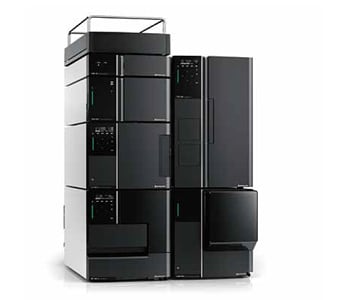
LCMS-2050 Single Quadrupole LC/MS
For non-regulated work, such as designing systems for PFAS removal or PFAS destruction, you may not need the sensitivity of a triple quadrupole, the high resolution of the Q-TOF, or a regulated method. In these cases, a single quadrupole instrument, such as the LCMS-2050 may be suitable. A single quadrupole instrument provides you with reliable results, using a much less complex and more cost-effective instrument. Like our other LC mass spectrometers the LCMS-2050 is capable of rapid polarity switching to detect both positive and negative mode simultaneously.