
Shimadzu at MSACL 2026
October 4-9
Hotel Bonaventure Conference Center
Montréal, Canada
Booth # 17, 18


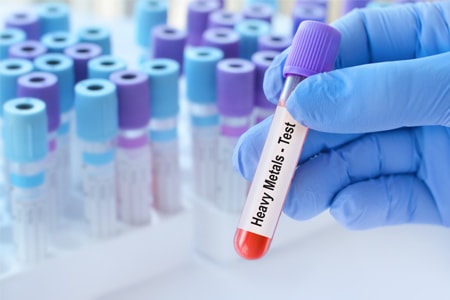
Heavy metal exposure can play a critical role in forensic investigations, particularly when poisoning or unexplained death is suspected. Elements such as arsenic (As), lead (Pb), mercury (Hg), cadmium (Cd), and thallium (Tl) are among the most important toxic metals encountered in forensic toxicology. Reliable, robust analytical technology is essential for toxicology laboratories to accurately detect and quantify trace levels of heavy metals in complex biological samples.
Shimadzu offers a comprehensive range of elemental analysis technologies to address different analytical needs—from rapid, non-destructive EDXRF screening of solids, powders, and other materials to sensitive atomic absorption (AA) analysis for targeted elemental determination. ICP-OES provides robust, multi-element analysis, while ICP-MS delivers the high sensitivity and low detection limits needed for trace-level determination of toxic heavy metals in common biological samples, including blood, urine and tissues.
Together, these complementary technologies provide forensic laboratories with flexible solutions for screening, quantification, and investigation of toxic elemental exposures across a variety of sample types and casework.
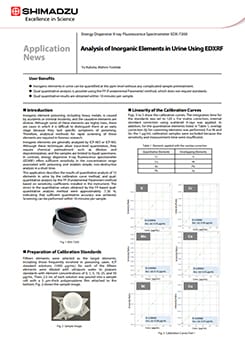
Poisoning from common inorganic elements like lead and mercury can be difficult to identify based on symptoms alone. In forensic investigations there is a need for rapid and reliable screening methods. This application demonstrates the use of energy dispersive X-ray fluorescence (EDXRF) for simple, non-destructive analysis of 15 elements in urine, providing quantitative and qualitative screening without extensive chemical pretreatment.
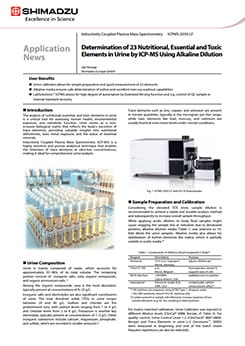
Concerned about passive ingestion and accumulation of toxic elements in your casework? Urine analysis provides a robust, noninvasive approach for evaluating dietary contaminants that could explain potential toxic metal exposure. This application highlights ICP-MS as a highly sensitive and precise technique for comprehensive urine analysis, enabling detection of trace elements at ultra-low concentrations.
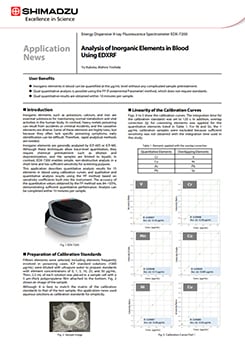
Essential elements such as potassium, calcium, and iron play critical roles in normal cellular function. Exposure to toxic heavy metals can disrupt these vital processes and requires a rapid screening tool for quick assessment. This application demonstrates the use of the EDX-7200 for simple, non-destructive analysis of 15 elements in blood, providing a streamlined approach for elemental screening.
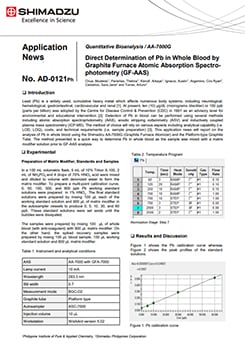
Lead (Pb) is a cumulative toxic metal that can affect multiple body systems. At elevated levels, Pb can even cause death. This application demonstrates a robust method for measuring Pb in whole blood using the AA-7000G graphite furnace atomic absorption spectrophotometer. Simple sample preparation with a matrix modifier prior to analysis makes this workflow appealing for any toxicology lab seeking Pb determination in whole blood.